
The Visionary Impact of ‘Treehouse of Horror VI’
On October 29, 1995 , on the verge of Halloween, Fox aired a very special episode of the already popular ‘The Simpsons’. It was ‘Treehouse of Horror VI’, the sixth episodic special in the series, which has become an annual tradition. It’s been exactly thirty years since that airing, and the result was so visionary and revolutionary as was everything ‘The Simpsons’ did in the nineties.
What Was Happening
In the segment titled ‘Homer³’, Homer Simpson passes through a portal that transports him from his traditional 2D animated world to a strange 3D computer-generated universe. This marked a technical challenge unprecedented for the series and represented a true milestone in television animation. It was one of the first visible incursions of CGI graphics in an animated series, which is doubly surprising given that we are not talking about an experimental program, but rather one of the most-watched series of the moment. For many viewers, it was their first encounter with an aesthetic of this type: a pioneering work by the company Pacific Data Images (PDI), which managed to create a few minutes of groundbreaking sequence that today is considered a benchmark in animation.
Why It Is Important
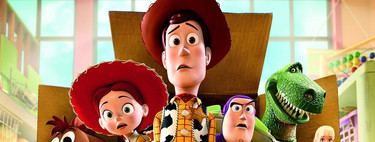
The segment not only attracted attention for its impressive technical innovation , but also for its characteristic humor. It never stopped being a ‘The Simpsons’ sketch, combining horror with the series’ customary wit. The episode aired just a month before the premiere of ‘Toy Story’, helping to mark that year as essential for CGI animation and its evolution in mainstream media.
How It Was Born
The original idea was conceived by series executive producer Bill Oakley , inspired by the episode ‘Little Girl Lost’ of the legendary ‘The Twilight Zone’. To bring this vision to life, the pioneering computer animation studio Pacific Data Images (PDI) was contacted, but the economic and technical demands were exceedingly high. The budget assigned by Fox for the segment was a mere $6,000 , whereas the real cost to create the four-minute segment exceeded hundreds of thousands of dollars .
Hair and Other Problems
PDI decided to take on the project almost as a strategic investment to achieve visibility and prestige in the industry, which would later allow them greater commercial opportunities. This decision ultimately paid off with their subsequent link with DreamWorks , who later acquired them and collaborated on successful films like ‘Antz’ and ‘Shrek’. The animation ended up being limited to only Homer and Bart, resulting in a few essential minutes of footage.
The PDI team had to reinvent the characters, crafting three-dimensional models that preserved the essence of the original design. One of the significant challenges was Homer’s iconic hairstyle , which was difficult to replicate with the digital tools of the time. The production process required the meticulous coordination of the series’ traditional animators and PDI specialists.
And With Easter Eggs
The backgrounds and objects in the 3D world were designed for both a sense of strangeness and an urgent minimalism . They included easter eggs like the iconic Utah Teapot, a standard test in computer animation. Additionally, reference was made to the video game ‘Myst’. This aesthetic aimed to emphasize the feeling of being in an artificial dimension, moving away from the familiarity of Springfield . A scene was included where Homer appears in the real world, filmed on Ventura Boulevard, which sought to experiment with different styles and genres within a single special.
The Legacy
The positive response to ‘Homer³’ was immediate. It was the most-watched fiction program of the week on Fox, with an audience of 22.9 million viewers , a figure that was extraordinarily notable for an animated special. Additionally, it received awards like recognition at the Ottawa International Animation Festival , highlighting its innovative and artistic value. A milestone that continues to amaze, even thirty years later, due to the daring and disruption it presented in a series that was already a cultural icon.
In Xataka | In 1997, a construction company had the crazy idea of building the Simpsons’ house and putting it up for sale. It ended so-so.