
The Decline of the 3.5mm Headphone Jack in Mobile Phones
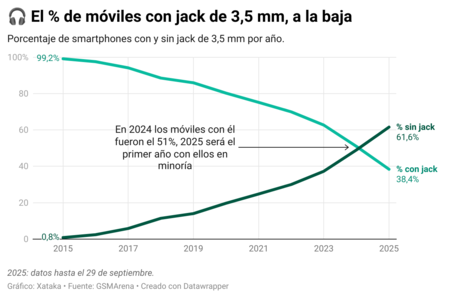
As we approach the end of 2025, a significant milestone has been reached in the world of mobile technology: mobile phones without headphone jacks have officially outnumbered those that still feature this once-essential connector. According to data compiled until September 29, 2025, a striking 61.6% of new smartphone models are now being released without the headphone jack, compared to 38.4% that continue to include it. This shift marks a notable change in consumer electronics, reflecting broader industry trends that prioritize wireless technology.
This year’s transitions signal the first time in a decade that there’s been an inversion in market share. In 2024, 51% of mobile phones launched were already designed without a headphone jack. The trend is particularly drastic when compared to 2015, when only 0.8% of devices launched lacked this feature, a stark contrast to our current landscape, which indicates a clear pivot toward wireless audio solutions.
The Data Behind the Trend
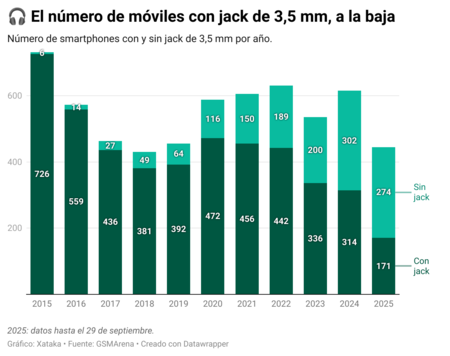
- In 2015 , 726 mobile phones were released with the headphone jack, and only 6 models opted to do without it.
- By 2024 , the numbers began to converge, with 314 models featuring the jack and 302 without.
- As of 2025 , only 171 models retained the headphone jack in comparison to 274 models that have abandoned it altogether.
The most significant declines have been observed in the last three years, as manufacturers push for a transition to more compact and streamlined designs.
Understanding the Shift
The decline of the headphone jack is not only a matter of consumer preference but reflects a broader strategic shift within the tech industry. Initially, Apple ignited this trend in 2016 with the introduction of the iPhone 7, marking a pivotal moment in mobile design philosophy. Other manufacturers quickly followed suit, often opting to eliminate the headphone jack not merely as a stylistic choice but as a cost-saving measure.
The rationale often cited for this significant change includes the desire for thinner devices and improved water resistance. However, the underlying reality has pushed consumers towards the wireless headphone market, which has expanded significantly since the jack’s decline.
Not Just Budget Models
Interestingly, not all mobile devices that retain the headphone jack are budget options. Premium models, such as Asus’s Rog Phone aimed at gamers and certain models from Sony’s Xperia line, still include this feature as a key selling point. Chinese brands like Xiaomi and ZTE have also incorporated the headphone jack in specific models, responding to niche market demands.
The decision to keep or eliminate the jack has become a calculated business strategy for many manufacturers. They’ve determined that the potential loss of nostalgic users who prefer wired headphones is outweighed by the financial incentives of promoting wireless alternatives.
The Path Forward
As the industry moves toward a wireless-only future, those who prefer the practicality of wired headphones will likely find themselves grappling with alternatives such as adapters or USB-C audio devices. The popularity of the USB-C connection has emerged as a compromise, but it, too, fragments the market. Not every cable headphone is compatible with every model, necessitating the use of converters in many cases.
The sector has made it clear: the future is wireless, primarily driven by profitability rather than technical superiority. This decision, once made, appears irreversible.
In a world saturated with wireless headsets, there may be challenges for users seeking a simple and reliable audio connection. The evolution of mobile design continues to prioritize sleekness and modern aesthetics, leaving behind once-prevalent features like the headphone jack in the rearview mirror.