
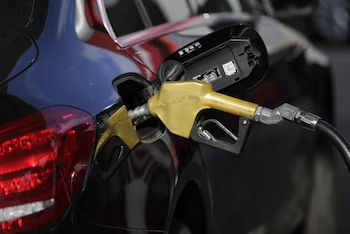
Rising Fuel Costs in Colombia: Implications of the Petro Government’s Tax Reform
The Colombian government, under President Gustavo Petro, has proposed a significant tax reform aimed at raising $22 billion by 2027. A key aspect of this overhaul is an increase in fuel taxes that would lead to a substantial rise in the prices of regular gasoline and Acpm (diesel).
Projected Increases in Fuel Prices
According to the Somos Uno Trade Union, if the proposed tax reform is enacted as planned, regular gasoline prices could increase by approximately $1,942 per gallon by the end of 2028. For Acpm, the expected rise is $1,331. Initially, on January 1, 2027, gasoline prices are projected to rise from $16,291 to $17,151, while Acpm will climb to around $12,417.
Path of Future Increases
The adjustments are not limited to the 2027 changes. An additional tax on fuel alcohol is slated for July 2027, alongside an increase in VAT on production income to 19% by January 2028. This staggered approach to price hikes suggests a sustained increase for consumers over the coming years.
Trade Union Concerns
David Jiménez Mejía, a spokesperson for Somos Uno, has raised concerns regarding several potential issues that come with the proposed changes:
Misalignment of Environmental Goals: The projected revenue from VAT on fuels contrasts sharply with the minimal environmental tax expected, posing questions about the applicability of these rates.
Impact on Transport and Agriculture: The proposed exclusion of retail sale from multi-phase VAT rules could lead to cascading taxes affecting the transport sector, agriculture, and industry, ultimately increasing prices for consumers.
Limited Environmental Benefits: Previous studies indicate that raising fuel prices does not necessarily lead to lower consumption, implying that the desired reduction in emissions may not materialize despite tax increases.
The Role of VAT on Service Margins
The reform also proposes taxing the regulated margins of service stations, potentially raising costs by about $219 per gallon. Jiménez Mejía notes that many service stations may struggle to pass these additional expenses on to consumers due to existing price regulations, leading to reduced operating margins.
Suggested Amendments from the Trade Union
In anticipation of potential adverse effects, Somos Uno has requested several adjustments to ensure the reform is more equitable and effective:
- Correct the VAT treatment for Acpm to maintain multi-phase levels and avoid cascading taxes.
- Exclude VAT on fuel alcohol and biofuels, which are not fossil fuels.
- Incorporate the retail margin VAT as an independent component in the pricing structure.
- Delay the implementation of specific regulations until Congress finalizes the reform language.
Conclusion: A Call for Technical Precision
As the dialogue around the tax reform continues, David Jiménez Mejía emphasizes the need for a technically correct design. He advocates for a careful discussion on how sectors should contribute financially, insisting that taxes should be levied where policymakers intend rather than inadvertently shifted due to design omissions.
The outlook for Colombian fuel prices under this proposed reform is concerning, particularly for residents in areas with limited service station access, where price increases could destabilize existing supply networks.