
The Rise of Hybrid Drones: Introducing the Rooster
The integration of drones in modern warfare has changed the dynamics of conflict significantly. Unmanned Aerial Vehicles (UAVs) have proven to be versatile and effective tools on the battlefield. They are utilized for offensive operations, reconnaissance, and intelligence gathering. However, conventional drones come with a critical limitation : they can only operate in the air. This is where the innovative hybrid drone known as the Rooster enters the scene.
What Is the Rooster?
The Rooster is a unique hybrid drone designed by the Israeli company Robotican . Its standout feature is its ability to both fly and maneuver on the ground. Unlike traditional drones, the Rooster incorporates a specialized wheel system that allows it to traverse complex terrains effectively. Although not specifically wheels, these unique cages enable the Rooster to navigate challenging landscapes, further broadening its operational capabilities.
Teamwork Makes the Dream Work
Another remarkable aspect of the Rooster is its capability to operate in teams. A trio of Roosters can form a network , interconnecting to share sensory data, including high-definition imagery from onboard cameras. This real-time connectivity is particularly crucial in environments where GPS signals are unreliable, allowing for seamless coordination and enhanced situational awareness.
Specifications and Features
Not only is the Rooster innovative in its design, but it also boasts impressive technical specifications. The drone weighs approximately 1.6 kilograms and can carry a payload of up to 300 grams , allowing it to transport sensors or thermal imaging devices. Its battery life supports 12 minutes of flight and 30 minutes of ground operation. The Rooster’s operational abilities are astonishing; it can easily transition from flying to ground exploration, enabling it to investigate complicated environments efficiently. Equipped with night vision cameras and an obstacle detection system powered by artificial intelligence, the Rooster records in Full HD , ensuring high-quality data collection.
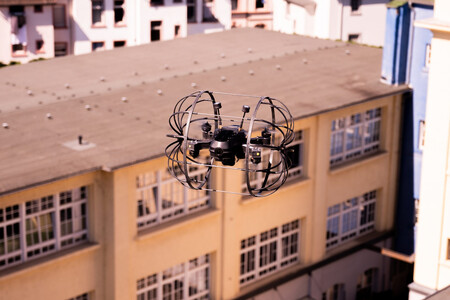
<span>The Rooster flying | Image: robotican</span>Current Adoption and International Interest
Recently, the Rooster has gained traction among military forces. It is currently utilized by the Israeli Defense Forces and has garnered interest from NATO . Just three days ago, it obtained a NATO Stock Number , a 13-digit code that allows for easy identification and cataloging of military supplies. This not only signifies its endorsement by the military alliance but also assures potential buyers that it meets rigorous operational standards.

<span>The rooster on land | Image: robotican</span>Geopolitical Context
Israel, although not a NATO member, has maintained strategic partnerships with NATO countries, establishing itself as a significant player in the global defense industry. The current political context is complex, with relations between Israel and other nations fluctuating due to ongoing conflicts, notably the Israel-Palestine situation. On one hand, Israel enjoys strong support from the United States, which classifies Israel as a Major Non-NATO Ally (MNNA) , while on the other hand, it faces condemnation from the European Union regarding its actions in conflict zones like Gaza.
Future of Hybrid Drones
Recent geopolitical developments underscore the transformative potential of drones in warfare, particularly amid escalating conflicts such as the Israel-Palestine situation and the Ukraine War. The ability to operate drones remotely grants military forces a tactical edge, allowing for precise operations without endangering personnel. The emergence of versatile hybrid drones like the Rooster heralds a new era in drone technology, offering a multifaceted approach to modern combat. As military strategies evolve, the Rooster is poised to become an essential asset on the battlefield.
Cover image | Robotican
In Xataka | Solving one of the great mysteries of war video games: if weapons have copyright or not