
In October 2023, a significant incident involving an electric scooter’s battery led to a three-hour closure of a subway line in Madrid, Spain’s capital. As a direct consequence, authorities decided to prohibit the entry of electric scooters into public transportation until 2027. Meanwhile, in China, a more futuristic solution has been discovered: robots that seamlessly integrate into subway networks.
What was once confined to the realms of science fiction is now a palpable reality. The world is witnessing a rapid evolution in the development of robots. Previously, demonstrations from companies like Boston Dynamics showcased dance robots primarily geared towards industrial applications. Today, we see the emergence of machines catering to a plethora of purposes.
From boxing robots and football-playing machines to humanoid robots available at consumer prices, innovation seems boundless. One striking example is a fleet of autonomous robots designed to assist visually impaired individuals, currently being trialed in various locations across China. Notably, these robots have begun work in the Shenzhen subway system, effectively making their rounds.
Robots Storm the Subway
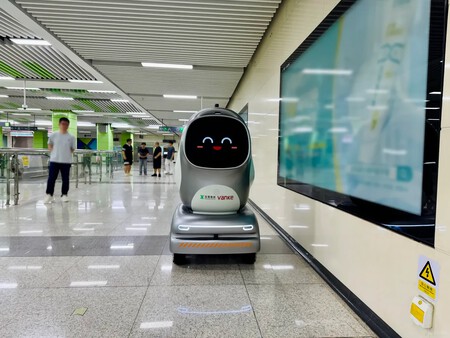
Recently, 41 autonomous robots from VX Logistics have begun circulating across various metro lines in Shenzhen. These robots are equipped with advanced processors allowing for artificial intelligence tasks, complemented by lidar sensors that grant them panoramic vision . This AI enables them to make real-time decisions, optimizing their routes to their destinations.
The primary mission of this robotic brigade is to deliver supplies to 7-Eleven stores located within the subway stations. Unlike conventional delivery systems, these robots can navigate the subway independently , ascending and descending via elevators without any human intervention.
With a design somewhat reminiscent of the robot waiters gaining popularity in some Spanish restaurants, these machines can carry weights of up to 130 kilograms . Currently, they are part of a pilot program aimed at exploring how they can effectively manage deliveries across the 100-plus 7-Eleven stores within the Shenzhen subway network , which services an impressive nine million daily riders . Plans are underway to broaden the robots’ operational scope beyond this initial deployment.
Significantly, VX Logistics is a subsidiary of Vanke, a prominent Chinese real estate giant co-owning the Shenzhen Metro. This collaboration has resulted in over 40 autonomous robots being deployed, effectively addressing a perennial challenge: the restocking of stores within the subway system.

Li Yanyan, a manager at one of the 7-Eleven locations, mentioned, “Previously, distributors had to park above ground, unload the merchandise, and transport it manually inside the store. Now, with the robots, operations are significantly more efficient.” However, it remains unclear what will happen to traditional distributors as more robots come into play.
What is certain is that these robots will evolve based on their performance in the real world. For now, they operate mainly during off-peak hours to minimize disruption. Their progress is slow, which has led to curious travelers stopping to take pictures or videos. Fortunately, the robots feature screens displaying friendly animated faces , allowing for engaging interactions with passengers.
As we observe these initial trials, time will reveal how quickly similar technologies might appear in other subway systems. One fact is clear: China is heavily investing in robotics , particularly in urban areas like Shenzhen, home to around 1,000 robotics firms , with some 18 companies focusing specifically on humanoid technologies.
Images via: VX Logistics
In summary, China’s deployment of robots for logistical functions within its subway system not only showcases the country’s technological advancements but may also set a precedent for future urban transport solutions globally. The potential implications for efficiency, safety, and user experience are significant, paving the way for a more automated future in public transportation systems around the world.