
When the United States activated export controls that ultimately led Anthropic to disable Fable 5 and Mythos 5 for all its users, a reality that was difficult to ignore was exposed: access to advanced AI may be cut off. Not because the model disappears, nor because it stops working technically, but because a national security decision can convert an available tool into a conditioned capability. While the controls on Fable were lifted after new safeguards and Mythos was limited to a handful of trusted US organizations, the precedent remains concerning.
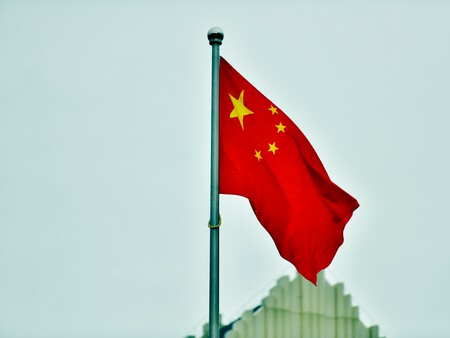
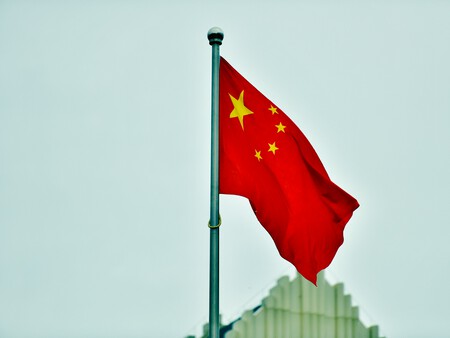
Now, the conversation shifts towards China, as Reuters reports that Chinese authorities have held discussions with major technology companies to explore possible restrictions on foreign access to their advanced AI models, including those not yet launched. Companies like Alibaba, ByteDance, and Z.ai are involved, but no set measures or timelines have been established. Crucially, Beijing is deliberating how much it wants to open up its most advanced AI products.
What was discussed in those meetings goes beyond merely closing an API or limiting access to specific products. Participants talked about imposing limits on the most advanced models and toughening the consequences for what they termed leaks or thefts of proprietary AI technology. These could be classified as crimes under China’s stringent national security laws. Furthermore, restrictions on funding for domestic AI startups were also on the agenda.
Advanced AI: A Strategic Perspective
There are several implications of these developments that extend beyond China. The emergence of models like DeepSeek R1 has illustrated that AI developed in China is gaining traction globally, driven by a compelling mix of low costs and rising capabilities. Notably, Alibaba’s Qwen and ByteDance’s Doubao, along with Z.ai’s GLM-5.2, are showing competitive prowess against leading American offerings at significantly lower costs. If Beijing limits access to these models, many businesses and users might find themselves with fewer choices and, likely, higher expenses.
The Chinese AI sector is also keen on developing cybersecurity-oriented systems that may rival those in the United States. Zhou Hongyi, founder of cybersecurity firm 360, has asserted that China must develop its equivalent of Mythos, presenting Tulongfeng as a solution capable of identifying myriad vulnerabilities.
This raises critical issues, especially from a European perspective. With Anthropic’s case highlighting the potential for restricted access to American models, observers pointed to Chinese alternatives as potential options—models that are cheaper, increasingly advanced, and, in some cases, available through APIs or with open weights. However, the latest discussions from China introduce significant nuances; switching suppliers might lower costs or enhance technical options, but it does not eliminate dependency if the critical capabilities remain under foreign jurisdiction.

Moreover, Europe has been contemplating these risks even before the recent developments surrounding Anthropic and Chinese initiatives. The Commission has emphasized the necessity to lessen dependencies on cloud services, AI, and semiconductors, correlating this agenda with the continent’s autonomy and digital resilience. In these discussions, Brussels has issued warnings concerning potential “kill switches,” which could allow a foreign entity or government to disrupt essential technological services.
Consequently, Europe finds itself in a reactive position. The United States already possesses some of the world’s most advanced models and has demonstrated a willingness to condition access based on national security concerns. Concurrently, China has made strides with its advanced and affordable models and is reportedly considering implementing its own restrictions. Meanwhile, Europe, while equipped with regulations, sovereign aspirations, and promising startups, still lacks the commercial heft, global reach, and strategic capabilities of the products that currently set the technological benchmark.
Images | Xataka with Nano Banana | Arthur Wang
In Xataka | Alibaba’s Qwen AI model is the new crown jewel. The only problem is that they don’t make money from it.