
The Trade Agreement’s Implications
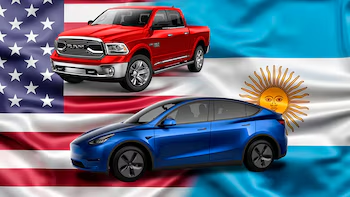
The trade agreement between Argentina and the United States has created significant enthusiasm across various sectors, particularly concerning the automotive industry. Many wonder if this agreement will lead to an influx of American cars into the Argentine market.
Quota and Tariff Limitations
While details on the specifics of the agreement remain unclear, it is evident that a free import of North American cars is not on the horizon. Instead, imports will be subject to a specific volume or monetary quota. It is uncertain if there will be a reduction in the 35% import tariff or if it might drop to zero, which could potentially allow for lower prices on U.S. cars. However, even with these opportunities, the high quota limitations may not substantially increase sales volume due to the restricted number of import units.
The Role of Brazil in Argentina’s Automotive Market
A pivotal aspect influencing the import of U.S. cars is Argentina’s established Economic Complementation Agreement (ACE 14) with Brazil, valid until June 2029. This agreement allows for the direct exchange of vehicles without tariffs, creating a protective umbrella for local industries. As a result, vehicles imported from the United States will face a common extrazone tariff of 35%, making them less competitive in the Argentine market.
Competitive Landscape
The majority of vehicle sales in Argentina are dominated by Brazilian imports. Currently, around 50% of the total cars sold in Argentina come from Brazil. With 68.5% of Argentine exports directed to Brazil, the automotive linkage remains extremely tight. Additionally, a significant amount—about 31.5%—of auto parts supplied to Argentine manufacturers originates from Brazil.
Opportunities Beyond Traditional Imports
While conventional U.S. car imports face hurdles, Argentina also maintains a quota allowing for 50,000 hybrid and electric cars to be imported annually without bearing the import duty. This quota is noteworthy as it coincides with the ACE 14 timeline, hinting at longer-term strategies in adapting to evolving market needs.
Conclusion: A Complex Ecosystem
In summary, despite the enthusiasm surrounding the trade agreement with the United States, several factors limit the potential increase of car imports. Argentina’s strong trade relationship with Brazil, tariff limitations, and market dynamics play a critical role in shaping the automotive landscape. As the situation unfolds, stakeholders will need to navigate this complex regulatory environment to effectively capitalize on available opportunities.