
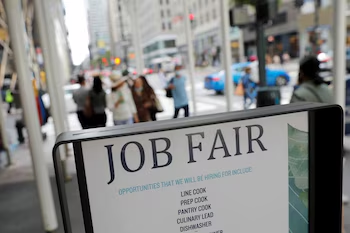
U.S. Jobs Report: Insights on September’s Employment Data
In September, the U.S. economy surprisingly added 119,000 jobs, significantly exceeding economist expectations of just 50,000. However, the unemployment rate rose to 4.4%, the highest level since October 2021, as 470,000 individuals entered the labor market, indicating a complex employment landscape.
Job Growth and Unemployment Trends
The substantial job gains in September come despite a backdrop of ongoing economic uncertainty. The Department of Labor reported that many of the new entrants into the labor market struggled to find immediate employment. This rise in unemployment is partly attributed to a larger pool of job seekers rather than a significant number of job losses.
The overall payroll increase reflects a robust hiring environment in certain sectors, with health care and social assistance leading the way by adding over 57,000 jobs. Other notable contributors included construction with 19,000 jobs and retail with almost 14,000 jobs. Conversely, the manufacturing sector saw a decrease of 6,000 jobs, and the federal government lost 3,000 positions.
Revisions and Economic Indicators
A revision by the Labor Department revealed that the economy actually lost 4,000 jobs in August, rather than the previously reported 22,000 gains. These adjustments meant that employment figures for prior months—July and August—were downgraded by a total of 33,000 jobs. Over the past year, job creation has seen a significant slowdown, averaging only 53,000 jobs per month since March, compared to 400,000 jobs per month during the post-COVID hiring boom.
Wage Growth Amid Economic Challenges
Hourly wages grew by just 0.2% from August and 3.8% year-on-year. This rate of wage increase is nearing the 3.5% benchmark that the Federal Reserve considers favorable in its fight against inflation. Such wage growth is essential for maintaining consumer spending, particularly as inflationary pressures remain prevalent.
Economic Outlook and Future Considerations
The release of September’s employment data comes at a critical time, especially following a 43-day government shutdown that hampered data collection and analysis. This report will be instrumental for investors and policymakers as they navigate an uncertain economic landscape characterized by high interest rates and an unpredictable geopolitical environment under the Trump administration.
The Path Forward
Federal Reserve policymakers are now confronted with crucial decisions regarding interest rates, with divisions emerging over the potential for a rate cut in light of mixed economic signals. Observers expect the trend of low hiring with few layoffs to persist, offering job security to those already employed while leaving job seekers in a challenging position.
As the labor market continues to evolve, the next Federal Reserve meeting and subsequent reports may provide further clarity on whether current economic conditions warrant a shift in monetary policy. The upcoming October and November jobs reports, although delayed, will be closely watched for additional insights into employment trends and economic health leading into the end of the year.
For ongoing updates on employment trends and economic indicators, stay tuned for our detailed analyses and expert insights.