
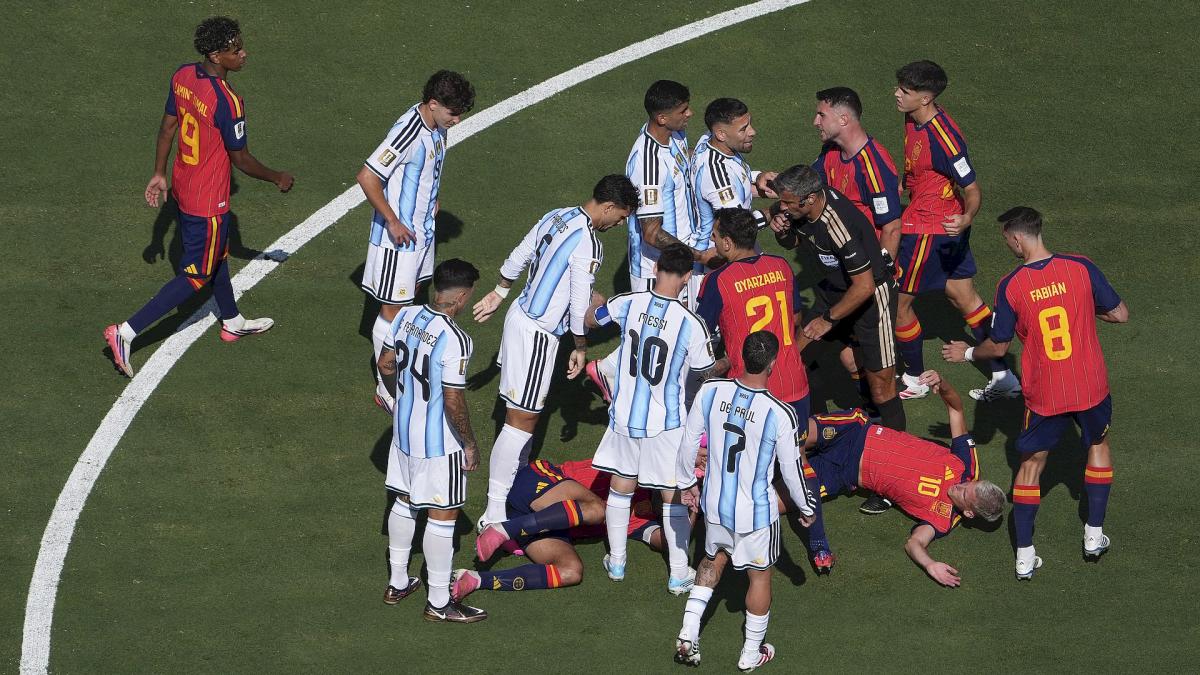
Argentine Deputy Breaks Silence After Incident with Dani Olmo
The aftermath of the World Cup final between Argentina and Spain continues to dominate discussions in football circles. Notably, the actions of Roberto Ayala, a deputy to Argentine coach Lionel Scaloni, have sparked outrage and debate. Following the match, Ayala reportedly confronted Spanish player Dani Olmo, leading to widespread scrutiny of his behavior.
Ayala’s Admission
In a recent interview with Capital Radio, Ayala expressed remorse for his actions during the dramatic moments following the final whistle. He clarified, “My intention was to separate, nothing more.” This indicates that his actions were impulsive and reactionary, spurred by the high emotions that often accompany tightly contested matches.
Reflection on Conduct
Ayala candidly acknowledged that regardless of the circumstances, his behavior was unacceptable. “I reacted to certain comments, but that is not an excuse; my behavior should not be like this,” he confessed. Such admission resonates with many football fans who expect players and staff alike to exhibit sportsmanship, even in the heat of the moment.
An Apology to Dani Olmo
“We have to remember that football is a sport, and things happen on the pitch,” Ayala remarked, emphasizing that he would seek forgiveness from Olmo if given the chance. His acknowledgment of wrongdoing demonstrates accountability, a quality that is often lauded in sports figures. Furthermore, Ayala’s insistence that “these are things that remain on the ground” suggests he wishes to move past the incident and focus on the game itself.
Kudos to Spain’s Performance
In a rare acknowledgment of the opponent’s prowess, Ayala stated, “Spain was superior and deserves the title.” This sentiment provides insight into the mutual respect that can exist between rival teams. In a sport riddled with passionate rivalries, such recognition can help mend fences and foster goodwill among players and fans alike.
The Ongoing Discussion of Sportsmanship
This incident has reignited conversations surrounding sportsmanship in football. As emotions run high in high-stakes matches, it is essential for players and coaching staff to maintain professionalism. Ayala’s experience serves as a reminder that even seasoned professionals can lose their composure under pressure, reinforcing the need for emotional regulation in competitive sports.
Conclusion
As the footballing world continues to analyze the events of the World Cup final, Roberto Ayala’s reflections serve as a critical lesson in humility and sportsmanship. His willingness to admit fault and recognize the achievements of the Spanish team speaks volumes about his character and commitment to the sport. It remains to be seen how Ayala will move forward from this incident, but the broader implications for sportsmanship in football are clear: respect for opponents is paramount, regardless of the outcome.