
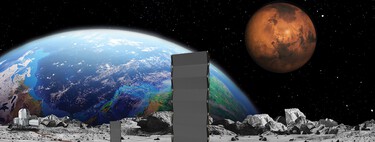
The Extent of Earth’s Atmosphere: Beyond the Conventional Borders
The belief that space begins where heaven ceases to be blue is a notion rooted in childhood tales. However, advancements in scientific research have revealed that the Earth’s atmosphere extends far beyond what was previously believed. Surprisingly, the 12 astronauts who walked on the moon did not entirely escape its influence.
Understanding Where Earth Ends
According to Doug Rowland of NASA’s Heliophysics , there is no definitive border between the Earth and the environment above it. He states, “The atmosphere does not stop at Everest or where planes fly. It continues and continues, becoming less dense as you ascend.” This highlights the complex and dynamic nature of our atmospheric layers.
The International Space Station (ISS), orbiting approximately 400 kilometers above Earth, encounters significant air resistance that necessitates regular boosts to avoid re-entering the atmosphere. The most startling revelation emerged from decades of observations by the Solar and Heliospheric Observatory (SOHO), a collaborative initiative between ESA and NASA.
Going to the Moon and Beyond
A recent study using data from SOHO has demonstrated that the outermost layer of our atmosphere, known as the Geocorona , consists of a faint cloud of hydrogen atoms that extends up to an astonishing 630,000 kilometers—almost twice the distance from the Earth to the moon. This discovery alters our understanding of how far our planet’s atmospheric influence reaches.
During the Apollo 16 mission in 1972, astronauts installed the first telescope on the moon and captured images of the geocorona glowing in ultraviolet light. Little did they know they were still within its reach. According to Igor Baliukin, the study’s main author, “The moon flies through the atmosphere of the Earth,” emphasizing the interconnectedness of celestial bodies.
Oxygen and Its Role on the Moon
The influence of Earth on the moon is not limited to hydrogen; oxygen atoms from Earth also make their way to the lunar surface. This phenomenon occurs approximately five days each month when the moon traverses the Magnetotail of Earth, which is essentially the planet’s magnetic tail. During this period, oxygen ions are propelled toward the moon, becoming embedded in the lunar soil.
Researchers estimate this process has been taking place for about 2.4 billion years , signifying that lunar regolith could serve as a historical record of the evolution of our atmosphere over eons.
The “Official” Border of Space
The Earth’s atmosphere is delineated into distinct layers: Troposphere , Stratosphere , Mesosphere , Thermosphere , and Exosphere . The exosphere begins at roughly 700 kilometers in altitude and gradually merges with the solar wind approximately 10,000 kilometers above. While particles within this layer are sparse and scattered, they can still escape into space.
The “official” boundary of space, commonly referred to as the Kármán line , is located 100 kilometers above sea level. This line is conventionally recognized as the point beyond which traditional aeronautics becomes impossible due to insufficient air. Nonetheless, the existence of the geocorona serves as evidence that the atmospheric influence of our planet extends far beyond this established threshold.
As we continue to unravel the complexities of our atmosphere and its cosmic connections, it becomes increasingly clear that our concept of “space” is far more intricate than once thought. Research like that of SOHO not only deepens our understanding of atmospheric science but also opens avenues for future exploration and questions about our place in the universe.
In conclusion, the intricate layers of the Earth’s atmosphere and their far-reaching influence emphasize just how interconnected our planet is with the cosmos. As our understanding evolves, so too does our perspective on what constitutes the boundaries of space.