
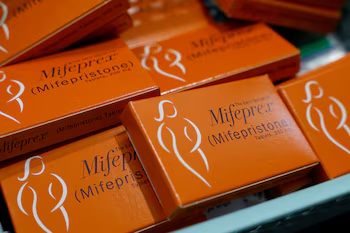
Supreme Court Upholds Access to Mifepristone Amid Ongoing Legal Challenges
The United States Supreme Court has decided to uphold access to the abortion pill mifepristone while a federal lawsuit progresses. This decision permits laboratories such as Danco Laboratories and GenBioPro to continue distributing the medication via pharmacies and mail, a significant win for advocates of reproductive rights, particularly in states like Louisiana where access has been under scrutiny.
Implications of the Supreme Court’s Decision
As reported by NBC and AP News, access to mifepristone will remain available at least until next year, allowing patients to obtain the drug without the need for physical consultations with medical professionals. The Supreme Court refused to impose immediate restrictions, meaning the pill can continue to be distributed by mail and in pharmacies throughout the U.S., even in states with strict abortion laws.
This ruling comes in the wake of a lawsuit from Louisiana questioning the Food and Drug Administration’s (FDA) policy regarding mifepristone prescriptions, claiming safety concerns that the FDA has repeatedly refuted.
Mifepristone’s Role in Abortion
Mifepristone has become a critical resource for abortion, accounting for approximately 66% of all abortions performed in the United States as of 2023. Its availability through telemedicine and mail order has significantly expanded access to care, especially post-Roe v. Wade, which was overturned in 2022.
Judge Samuel Alito, one of the key figures in the decision, noted that pharmaceutical companies were benefitting from “illegal sales” of the drug in states where its use has been banned. This raises important questions about federal regulations versus state laws, particularly in anti-abortion states.
Key Players in the Ongoing Legal Battle
The legal dispute involves multiple stakeholders, including anti-abortion groups, medical organizations, Democratic lawmakers, and the federal government. Advocates for reproductive rights have voiced their concerns about the implications of restricting access to mifepristone. They warn that doing so could impact the broader drug approval process in the U.S.
Justice Clarence Thomas referenced the Comstock Law, a 19th-century regulation prohibiting the mailing of products associated with abortion, reinforcing the tension between historical legal frameworks and contemporary medical practices.
Future Considerations
While the Supreme Court’s ruling affirms access to mifepristone, anti-abortion groups view this as a temporary setback. The ongoing legal battle will likely unfold in the months ahead, with discussions focused on the FDA’s role and the broader implications for abortion rights across the country.
In response to these developments, many prescribers are beginning to prepare for potential restrictions on mifepristone, exploring alternatives like the exclusive use of misoprostol, another medication commonly used for medical abortions.
Conclusion
The decision from the Supreme Court to uphold access to mifepristone is a pivotal moment in the fight for reproductive health rights in the U.S. It underscores the ongoing battle surrounding the legality and safety of abortion-related medications amidst an evolving legal landscape. As the judicial process continues, advocates for both sides are bracing for further developments that will shape the future of abortion access in America.