
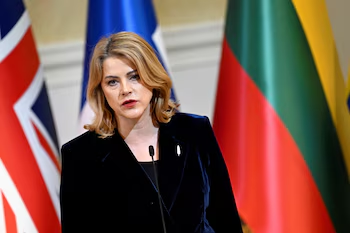
The Resignation of Latvia’s Prime Minister: A Warning for NATO’s Baltic Flank
The recent resignation of Evika Siliņa as the Prime Minister of Latvia marks a significant political upheaval just months prior to parliamentary elections. This development occurs amidst rising tensions along Latvia’s borders, exacerbated by recent incidents involving Ukrainian drones mistakenly landing within Latvian territory. Such instability raises urgent concerns about the resilience of NATO’s eastern flank, particularly as Moscow increases its military preparedness.
Context of the Crisis
The immediate catalyst for the crisis was Siliņa’s decision to dismiss Defense Minister Andris Sprūds following several reports of drones, allegedly aimed at Russian targets, breaching Latvian airspace. In response, the Progressive Party, to which Sprūds belongs, withdrew its support for the ruling coalition. This move not only prompted Siliņa’s resignation but also led to questions about the government’s ability to effectively handle external threats from Russia and Belarus.
Geopolitical Alert
As Baltic diplomats note, the current geopolitical landscape is fraught with uncertainty. Vladimir Putin’s regime has been increasingly provocative, especially during periods of leadership changes in the U.S. under former President Donald Trump. The potential for military escalations along NATO’s eastern borders has always loomed, becoming more pressing as European nations aspire to boost military expenditures.
Latvia’s Strategic Importance
Latvia holds a crucial position concerning European security due to its direct borders with both Russia and Belarus. It has committed significant resources to defense, aiming to meet NATO’s guideline of allocating 5% of its GDP towards military spending—an objective it may achieve much earlier than the planned target of 2035. As reported by the Financial Times, this heightened investment reflects Latvia’s strategic intent to bolster its defense capabilities amidst growing concerns over Moscow’s military activities in the region.
The Drone Incidents
Latvia’s investment in drone warfare technologies, both offensive and defensive, has been significant. However, the recent crashes of Ukrainian drones in Latvia—the same incidents observed in neighboring Estonia and Lithuania—have sparked widespread unease among the public and within governmental ranks. Ukraine’s Foreign Minister has suggested that Russian electronic interference plays a role in these incidents, adding to the anxiety among Baltic states about becoming potential military targets for Moscow.
Calls for Political Resilience
Following Siliņa’s resignation, Latvian President Edgars Rinkēvičs announced plans to consult with parliamentary parties in search of a viable political solution. Former presidents and other high-ranking officials have stressed the dire consequences for Latvia should it fall into a state of misrule, especially in light of escalating threats from the Kremlin.
Conclusion: A Precarious Future
As Latvia navigates this complex situation, the resignation of its Prime Minister serves as a dire warning for NATO’s Baltic allies. The incidents involving drones not only illustrate operational vulnerabilities but also the underlying political fragility in a region marked by significant geopolitical tensions. The unfolding events highlight the need for unity and strategic preparedness within NATO to safeguard European security from the looming threat posed by Russia. As the situation develops, it will be critical to observe how Latvia and its allies respond to these formidable challenges.