
Peter Thiel’s Controversial Claim
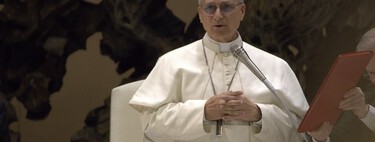
At the recent Aspen Ideas Festival, renowned investor and co-founder of PayPal, Peter Thiel, didn’t hold back on his views regarding Pope Leo XIV. He accused the Pope of being, perhaps unknowingly, an ally to the Chinese Communist Party due to the contents of his latest encyclical, Magnificent Humanitas.
Thiel’s Principal Argument
In his encyclical, Pope Leo XIV advocates for the regulation of artificial intelligence (AI) to prevent its misuse. Thiel argues, however, that this moral call is unlikely to resonate within China, where the Catholic Church is a minority. He asserts that while the encyclical may find support globally, it overlooks the unique dynamics at play in a nation governed by the Communist Party, which has a different stance on issues of morality and ethics.
The Implications of Thiel’s Perspective
In Thiel’s view, by advocating for the regulation of AI without addressing China’s advances, the encyclical effectively allows the country to continue progressing without any ethical restrictions. The investor bluntly concluded that this stance essentially positions the Pope as “working for the Chinese communists.”
A Long-standing Discontent
This accusation follows a series of controversial remarks and actions by Thiel. Earlier this year, he delivered lectures on the Antichrist, sparking significant concern within the Vatican. Two Catholic universities even had to clarify their non-affiliation with his talks, showcasing the tension between his views and that of the Church. Thiel posits that the Antichrist is not a singular entity but represents a world government that emerges under the premise of safeguarding humanity against threats like AI.
Wider Concerns Raised by Thiel
Thiel’s criticisms don’t end with the Pope. He has also claimed that a “democratic-socialist coup d’état” is unfolding in the United States. He leveled unsubstantiated accusations against the AI firm Anthropic, branding it as “woke liberal” and suggesting that it intends to manipulate upcoming elections in favor of Democrats.
Thiel’s Broader Agenda
This dialogue raises key questions surrounding not just the ethics of AI but the political landscape within which these discussions are situated. Thiel’s trajectory in Silicon Valley and his early support for former President Donald Trump underline his influential yet controversial role in contemporary politics. His assistance in the political rise of figures like US Vice President JD Vance further exemplifies his engagement beyond the realm of business—and into the domain of political strategy.
As discussions around technological ethics and governance continue to evolve, Thiel’s arguments, albeit provocative, invite deeper contemplation on the intersections of religion, technology, and global politics.
Image credits: Gage Skidmore | Catholic Church England and Wales