
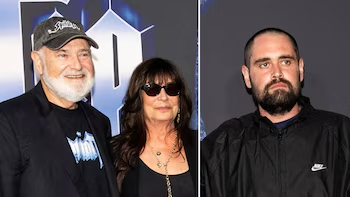
Rob Reiner’s Son: A Troubling Journey of Mental Health and Legal Issues
Background of Nick Reiner
Nick Reiner, the son of acclaimed filmmaker Rob Reiner, is currently accused of a shocking double homicide involving his parents. This tragic turn of events sheds light on a deeply troubled history punctuated by significant mental health challenges.
Timeline of Conservatorship
Recent reports from reputable sources like The New York Times reveal that Nick spent 12 months under a strict conservatorship in 2020 because of psychiatric disorders. The LA court’s decision was guided by the Lanterman-Petris-Short Act (LPS), which permits involuntary psychiatric treatment when individuals cannot care for themselves due to severe mental disorders. This designation indicates the gravity of Reiner’s mental health issues, validating concerns regarding his ability to comprehend his basic needs.
Severity of Mental Health Diagnoses
Legal experts state that entering an LPS conservatorship is not an everyday occurrence in California; a person must exhibit serious impairment. Nick has been diagnosed at various times with schizophrenia and schizoaffective disorder—two conditions notorious for complicating treatment.
- Schizophrenia is characterized by cognitive distortions such as hallucinations, delusions, and disorganized thoughts.
- Schizoaffective disorder combines the symptoms of schizophrenia with significant mood episodes, complicating the patient’s mental state further.
Recent Developments: Medication Change
Despite undergoing treatment, Nick’s mental health stability was disrupted. A month before the alleged murders, he changed his medication, switching due to unpleasant side effects. Experts warn that such changes should be made cautiously, as they can provoke withdrawal symptoms or the resurgence of psychotic episodes, further endangering the individual’s mental well-being.
Drug History and Complicating Factors
Compounding his mental health struggles is a long history of drug addiction, which has further complicated his situation. Nick has openly discussed these challenges, particularly in connection with his work on the film Being Charlie (2016), indicating that his issues are multi-faceted, extending beyond mere substance abuse.
Legal Ramifications of Mental Health
Given the complexity of his mental health, experts indicate this is likely to be a major focal point in his legal defense. Currently detained at the Twin Towers Correctional Facility in Los Angeles, Nick is represented by public defenders after his previous attorney resigned. The defense may argue that his lack of sound mind—attributable to his psychiatric disorders and medication changes—could influence his culpability for the alleged crimes.
Two potential defense strategies involve:
- Delaying the trial by arguing incompetence in understanding the judicial process.
- Asserting he was incapable of rationally understanding the nature of his actions at the time of the incident.
However, establishing a successful defense based on mental health issues is notoriously challenging, as juries are generally hesitant to acquit individuals who cause harm, regardless of underlying mental disorders.
Conclusion
The tragic case of Nick Reiner serves as a harrowing reminder of the pressing issues surrounding mental health and legal accountability. As this situation develops, it raises critical conversations about mental health treatment protocols, the complexities of addiction, and the moral implications of criminal responsibility in the context of serious psychiatric disorders.