
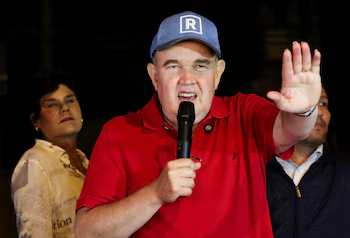
Rafael López Aliaga’s Bold Claims on Peru’s Electoral Institutions
Former presidential candidate Rafael López Aliaga has made waves with his vehement criticisms directed at Peru’s National Office of Electoral Processes (ONPE) and the National Election Jury (JNE). His claims center around allegations of electoral fraud against him, and he insists he will actively fight to eliminate these institutions.
Accusations of Electoral Fraud
In a recent address to the public, López Aliaga described the general elections as a “kidnapping of democracy by a criminal gang that has been operating with impunity for almost twenty years.” He asserted that these institutions have repeatedly stolen legislative seats from citizens, damaging the very fabric of democracy in Peru.
“They have stolen senators and deputies from us. But with what we have left, we are going to fight to eliminate this ONPE and National Election Jury, which cannot commit a crime every five years. This is over (…) they have made the wrong enemy,” he stated emphatically.
A Global Shame
López Aliaga criticizes the electoral system, claiming it has turned Peru into a “global shame” just as the world is redirecting its focus to the nation. His comments reflect a sense of urgency and disillusionment with the current electoral framework.
Logistical Failures in the Voting Process
He further elaborated on the inadequacies of the electoral system, particularly during the elections in Lima, which has over thirteen million residents. López Aliaga referenced logistical failures in distributing electoral material, leading to significant voter disenfranchisement.
“If the electoral material distribution system fails, it is unfeasible that elections should be prolonged by hours. Almost a million people did not vote in the capital,” he said, emphasizing the dire need for reform.
Refusal to Assume Senate Role
In light of his allegations, López Aliaga confirmed he will not assume his role as a senator. He believes doing so would mean endorsing the fraud he claims took place. “It would be endorsing fraud, it would be endorsing corruption,” he asserted.
Call for Social Justice
Central to López Aliaga’s message is a call for social justice. He believes that the issues surrounding electoral integrity are not just about his personal grievances but reflect a broader demand for fairness and representation in Peruvian politics.
“They have taken senators from us throughout Peru. Without the malicious logistical problems of April 12 in the first round, we would have had many more senators, more deputies,” he stated, reiterating that Peru is crying out for social justice.
Conclusion
As the political landscape continues to evolve in Peru, the implications of López Aliaga’s statements are yet to unfold. With a commitment to challenge the electoral status quo, his actions and claims may ignite further debates on the integrity of Peru’s electoral institutions. The nation watches closely as the developments unfold, eagerly anticipating the potential changes in a system that López Aliaga describes as in serious need of reform.