
Millions held their breath as Belly bit into peaches in slow motion, while Conrad experienced something far from a religious moment a few weeks ago; audiences echoed this sentiment as they witnessed a metaphor for something highly anticipated. The adaptation of Jenny Han’s novels ‘The Summer I Turned Pretty’ is the summer sensation: its third season, racking up over 25 million views in the first week alone, is causing more division than ever with the ongoing battle between Team Conrad and Team Jeremiah.
This particular reinterpretation of the classic ‘Sabrina’ has captivated millions, but what has genuinely shocked and revolved fans are several scenes, especially from episodes 5 and 6, featuring that peach feast. Why? We finally delve into the most intimate aspects of the relationship between Belly and Conrad, revealing their undeniable mutual desire. Unsurprisingly, Prime Video’s audience has exploded on social media, incessantly sharing moments from these last two episodes; readers and members of BookTok love the smut.
Thanks to this English jargon, utilized in the global reading community, lovers of romance have adopted terms like smut (vulgar or indecent) and spicy to discuss or highlight passionate and sexual scenes found within the genre. Referring to this intrinsic part of most romance novels allows us to understand the more hidden aspects of the characters and the nature of their relationship, aiding in grasping that more irrational aspect of certain connections we find within the pages.
The Rise of Smut
The development and tone of these scenes are often a draw for contemporary romance novels, especially in the romantasy and omegaverse genres. However, the distinction between romance and erotica is quite clear. In romance, sexual scenes are an enhancement that aids in character representation or plot, rather than being the backbone of the narrative. In erotica, sexual scenes hold the weight, and the plot is of secondary importance.
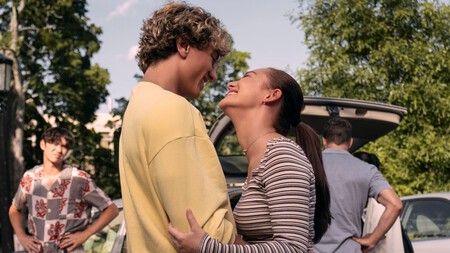
<span>'El verano que me enamoré'.</span>From a more casual perspective and for the delight of social media, the scope of this sexual tone in stories like romantasy has spawned its own category: fairie smut, referring to the supernatural beings that abound in these tales. Moving beyond trends or anecdotes, themes such as desire, consent, and intimacy are not merely a passing fad or a microtrend among contemporary romance readers.
This portrayal of the carnal and its intercession in the paths of characters has concerned many authors for centuries. Perhaps one of the most representative examples is the 20th-century work ‘Lady Chatterley’s Lover’, where its explicit treatment of sexual desire was essential to discuss the overthrow of social classes and the constraints of the society of its time.
Duncan Stewart, a media analyst specializing in technology and book publishing, discusses this enduring theme in the genre and notes the resurgence of sexual content in romance:
“There has always been a more sexually explicit romantic genre, but it was not considered mainstream… romantic fantasy is doing an extraordinary job of reflecting not only modern human sexuality but specifically the sexuality of those under 30.”
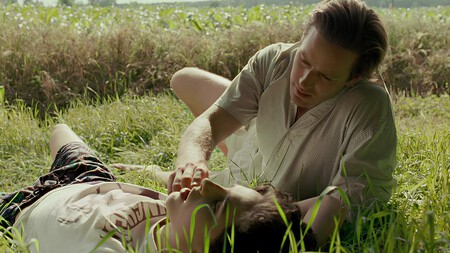
<span>'Call Me by Your Name' understood it perfectly.</span>The fact that romance is the fastest-growing narrative, thus attracting a massive and youthful audience, has transformed this intimate sexual aspect in romantic narratives, changing its category and perception. There is no longer the stigma or shame surrounding this fiction, and women, now more than ever, are enjoying and publicly sharing their connection with these types of readings. In fact, the search for adult-content novels has increased by 78% in the past year.
“These novels are empowering, foster empathy, provide an escape, and help readers recognize their own strengths. An important difference now is that readers simply don’t care how others perceive what they enjoy reading. There is a refreshing lack of shame now among readers, and that’s wonderful.” Tessa Baley
This shift in focus and rebirth of the explicit brings sexuality to the forefront as a central element and even an aesthetic element of the narrative. Embracing this aspect of the literature we consume sparks discussions on consent, libido, and sexual self-awareness, promoting an open and safe conversation about female desire.
@giab_reads Analysis of how our identity is constructed through booktok and how we are reducing the consumption of *nopor among teenagers #booktok #booktokespañol #booktoker #libros #libroslibroslibros #inmarubiales #alinanot @Inma Rubiales @Alina Not
Even experts have joined the conversation, reading what their patients frequently discuss and providing a professional perspective on this phenomenon, concluding that these kinds of readings offer real benefits for women’s sexual well-being.
Authors like Sally Rooney, a master of intimate scenes (essential in her storytelling) who showcases that radiant and visceral connection bolstered by addictive internal monologues; Tessa Baley, the “queen of dirty talk,” offers a more carnal intimacy within her lighter narratives; successful authors like Ali Hazelwood, Talia Hibbert, Sarah J. Maas, and Jennifer L. Armentrout organically weave these erotic scenes as vehicles to develop relationships, display vulnerability, and advance the emotional conflicts we encounter.
<img alt="Hay gente enamorándose de los criminales más despreciables que puedan encontrarse en la literatura: el auge del 'dark romance'" width="375" height="142" src="https://i.blogs.es/bafb9d/cumbres-borrascosas-1-1-/375_142.jpeg"/>It’s evident that both the publishing world and the audience are committed to the genre, leading us to frequent adaptations of romantic fiction successes. Adaptations can be a contentious topic, often met with a skepticism from the audience regarding the necessary changes. Nonetheless, with a juicy source text, a captivating plot, and characters that enamor readers, as well as excited fans anticipating the transition to screen, the success of the product should almost be guaranteed.
So, why do these adaptations sometimes feel like they miss the mark? What’s lacking?
The Intimacy Is Lost on the Big Screen
This feeling of emptiness does not stem solely from casting choices, production decisions, or deviations in the original plot. Generally, the answer lies within the smut, or lack thereof.
Since the year 2000, the sexual content of Hollywood movies has declined by 40%; half of box office hits completely skip intimate scenes. What’s particularly striking is that elements such as violence or drug use maintain their proportions. The industry has become more reluctant to explore intimate sequences , with more frequent blackouts in sexual scenes.
<span>The film industry has become more prudish.</span>This recent puritanism sweeping through cinema can be attributed to various factors: the reluctance of certain actors to partake in such scenes (even today when the presence of intimacy coordinators on set is mandatory), studios claiming that teenagers prefer stories about friendship over romantic or sexual narratives, or even the more practical issue of the time and cost involved in filming these scenes, shedding light on this decline.
Hollywood seems to shy away from controversy and promotions based on the sexual nature of films, as seen with ‘Pobres Criaturas’, ‘All of Us Strangers’, ‘Babygirl’ or ‘Saltburn’.
Often, promotional campaigns or interviews with actors focus solely on the explicit nature of the film, neglecting what they aim to convey with such elements. However, just as ‘Saltburn’ would be different without its provocative scenes, ‘Pobres Criaturas’ would tell another story without Emma Stone’s sexual awakening, or Luca Guadagnino would not be the same director without exploring desire and identity; this similar principle applies to literary adaptations. If we strip those of sensuality and sexuality, we lose one of the core attractions of the narrative.
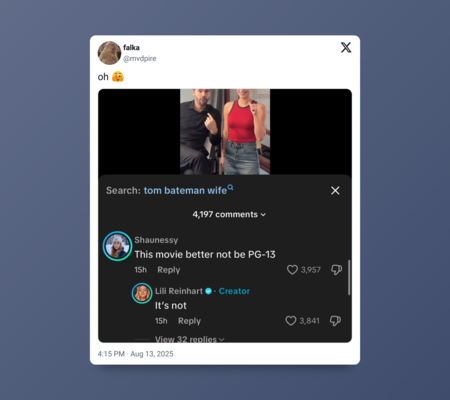
<span>Lili Reinhart, the lead and executive producer of the adaptation of 'La Hipótesis del Amor,' clarifies fans' doubts about the sexual content of the movie.</span>For adaptations, the tendency is to employ the traditional romantic comedy formula: intimate scenes that equate to visual tropes like a closed-door scene or blackouts. This doesn’t have to be a problem if we can observe that intimacy through other methods (remember the peach from the first paragraph?), yet often, this fails to occur. Films like ‘La idea de tenerte’, ‘Cariño, cuanto te odio’ or ‘Romper el círculo’ falter at this very point.
Where should we lean to believe a relationship marked by sexual tension and a connection from which the protagonists cannot escape? Representing a chaste kiss, a fleeting glance, or a series of dates in an accelerated montage rarely convinces, especially when there is source material available to draw from.
<img alt="Si la pregunta es 'qué es lo que más está leyendo la gente en todo el mundo', solo hay una respuesta: romantasy " width="375" height="142" src="https://i.blogs.es/a895c1/photo-1741158668442-88fe38de5de0/375_142.jpeg"/>In the local landscape, we face similar issues. The beloved saga ‘Culpables’ showcases the absence of connection and passion. While products adapted from this context may shed some prudishness, attempts to maintain the erotic essence of the book often overshadow its essence, creating content that feels superficial and simplistic. This was notably present in Megan Maxwell’s adaptations, such as ‘A qué estás esperando’ attempting to echo the color palette of ‘Valeria’ fails spectacularly, just like ‘Pídeme lo que quieras’.
Returning to a fundamental point, it’s not about nudity but rather utilizing cinematic language to enhance eroticism.
Series Offer Hope
Yet, not all is lost for lovers of romantic adaptations. The hope lies predominantly in the realm of series. We’re not talking about showcasing nudity everywhere or oversimplified portrayals of eroticism; indeed, since 2005, we have seen the lowest number of nude scenes in television series. This only underscores that the representation of intimacy and passion extends beyond mere visuals.
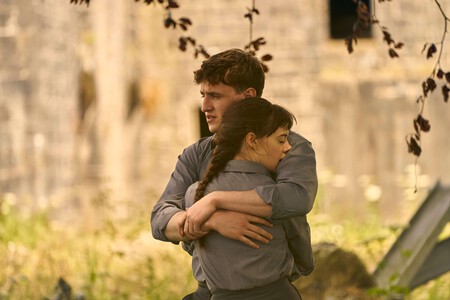
<span>'Normal People' added spice to the conversation.</span>Reviewing series based on literary successes that have conquered viewers on streaming platforms reveals a common denominator: all of them maintain the sexual aspects that enrich the original work and propel the narrative forward. An iconic example that has marked an entire generation is ‘Normal People.’ If, upon its transfer to the screen, we abandoned all or most of the sex scenes, crucial in Rooney’s narrative, we’d find ourselves with a mediocre product, failing to grasp the pivotal elements of the connection between Connel and Marianne.
One of the primary attractions and claims of ‘Outlander’ and its recently premiered prequel ‘Sangre de mi sangre’ is not solely based on its historical context or how well portrayed the Battle of Culloden is, but rather on the deep emotional connection and passionate romance that the protagonists emit from Diana Gabaldon’s work. Yet again, the series does not shy away from showcasing the passion and intimacy emphasized in the pages.
<img alt="Netflix y Prime Video dominan con mano de hierro las guerras del streaming. Su arma secreta: la literatura romántica " width="375" height="142" src="https://i.blogs.es/cd9c3b/cuento-perfecto-1-/375_142.jpeg"/>‘Tell Me Lies’ dives fully into the obsession and toxicity of certain relationships. In that journey, what better vehicle than to maintain the uninhibited and sexual aspect experienced by its characters onscreen? Despite the elevated erotic charge of these series, we’re not in a competition to see which series is the most explicit. Prime examples such as ‘El verano en que me enamoré’ and ‘Maxton Hall’ have been absolute hits that respect the original content by representing that physical and emotional harmony. It’s simply about wanting readers to see the nature of the relationships they savor in literature and the audience to believe in the relationships they witness on-screen.
As we navigate an era inundated with adaptations of romantic works, we must remember that sex remains a central pillar in many fiction stories, demanding narratives that discuss its day-to-day and transcendental nature. This wave of romantasy and contemporary romance underscores women’s necessity to be represented and to experience spaces created by and for them. If we cannot find that in films, we will have to continue placing our trust in series.
In Xataka | The great romance novel of the year is not a book: it is a Chinese video game where you choose your own “digital husband.”
In Xataka | JK Rowling has become a toxic figure for Harry Potter fans, leading them to expand the saga on their own.