
As I cruise at 120 km/h along the highway, the sound of the tires on asphalt and the rush of air enter the cockpit of my car, creating an exhilarating symphony. Despite the slight headache from the noise and the feeling of being firmly connected to the ground, I find myself feeling faster than ever. There’s no need for additional speed; I’m perfectly content where I am. Just a few kilometers remain before I make a right turn to explore the first town nestled in the Madrid Sierra , a quaint location beckoning adventure.
It is *summer*, still hanging on for dear life. The sun hasn’t quite dipped below the horizon, and the lazy afternoons that herald the end of the season have begun to materialize. Evenings now seem to stretch a little longer than before, as though the sunset has clandestinely consumed a quarter hour. These days of pleasant coolness follow the sweltering heat of August, creating a breathable atmosphere perfect for exploration.
This compels me to pull over briefly, disabling the central console button as I prepare to retract the roof. In mere seconds, the Mazda MX-5 reveals its open-top glory, sliding back smoothly, embodying the essence of roadster driving. There’s no rush; the journey is just as important as the destination.
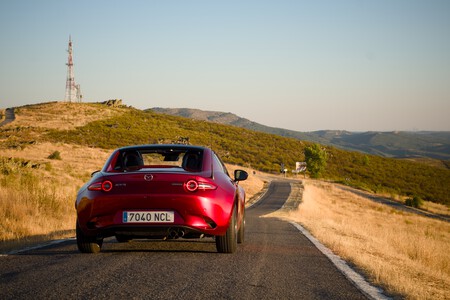
A Present that Knows the Past
This nostalgic delight reflects exactly what Mazda envisioned upon unveiling the MX-5 Miata at the edge of the 1990s. The sports car landscape of the 80s was fraught with rapid evolution, characterized by small yet powerful machines. Small turbos made their mark with vehicles like the Peugeot 205 and Renault 5 winning hearts and driving enthusiasm. As we entered the 90s, Japan found itself at the forefront, rolling out authentic supercars that captivated audiences around the globe.
Amidst this backdrop of high-octane competition, Mazda dared to diverge from the crowd. It cultivated the charm of a small convertible embracing the English roadster philosophy combined with Japanese reliability. It wasn’t about speed; it was about the joy of driving. This ethos remains, even as the modern iteration presents a slightly more aggressive stance while staying true to the fundamental ideals of lightweight performance and affordability .
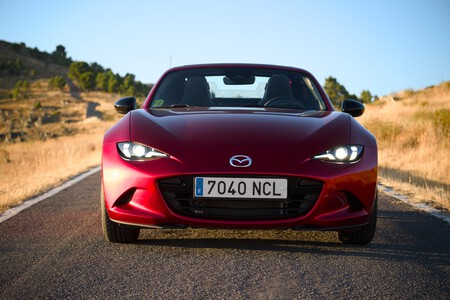
More than 35 years post-launch, the core values endure. Is a 35,000 euro price tag exorbitant? Perhaps, but in a marketplace devoid of comparables, the MX-5 stands alone as the last of its kind. Finding a vehicle that offers rear-wheel drive, manual transmission, and a convertible experience is increasingly rare; alternatives hardly live up to this standard.
The iconic Miata has roots steeped in the past but faces an uncertain future. With emissions posing significant challenges—recording 142 g/km of CO2 —it could fall victim to stringent European regulations targeting reductions in vehicle emissions by 2027. Mazda might find itself compelled to pivot towards more eco-friendly lineups, perhaps even adopting electrification strategies.

With electric vehicles gaining ground and triggering a shift in consumer preferences, the MX-5’s spellbinding formula risks extinction. Smaller, lighter cars are being overshadowed in an evolving market where performance and efficiency take precedence over the sheer joy of driving and clamoring for manual gears .

There Is No Hurry
The MX-5 holds a unique space in modern automotive culture.
While its specs may not command attention, featuring a 1.5-liter gasoline engine producing 132 hp , it serves a different purpose. In an age dominated by turbocharged engines, those modest numbers might seem inadequate to speed enthusiasts. Yet the Miata occupies territory that’s both niche and cherished, aimed more for enjoyment than aggression.
Driving the MX-5 is akin to savoring a delectable multi-course meal rather than hastily consuming a fast-food burger. One finds pleasure in each bend of the road, downshifting gracefully and applying the accelerator with precise control. Here, joy comes not from sheer speed but from responsiveness—a delightful dance rather than a race.
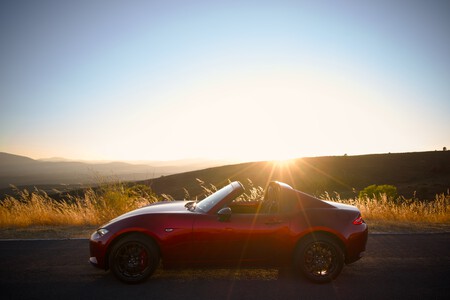
The experience of driving is liberating; manipulating gears and guiding the vehicle allows you to feel incredibly in control. Even amidst the swirling chaos on the road, navigating the MX-5 requires no specialized skills. It’s an accessible delight, catering to enthusiasts seeking both an entertaining weekend car and a practical daily driver.
In the mundane, everyday landscape, it shines. During those long, uneventful drives, you might yearn for speed, but with the MX-5, all it takes is an adventurous weekend to rediscover exciting performance. This enjoyment contrasts starkly with the more performance-oriented, compact models crowding the market. Practical day-to-day usability doesn’t overshadow the thrill it delivers on winding roads.
As I navigate the twinkling curves, the MX-5 feels like a toy—a miniature sports car prompting smiles and admiration. Encountering pedestrians who greet me with approving nods of nostalgia further cements this connection between driver and community.
With time dwindling, the highway calls us back. I retract the roof, mentally preparing to surrender the car back to its rightful owners.
Tomorrow, I will say goodbye. But until then, the Mazda MX-5 reminds me of a simple truth: sometimes, the journey matters more than the destination.
Photos | Xataka
In Xataka | The electric car threat of death to a classic of automobile mythology: the light sports car