
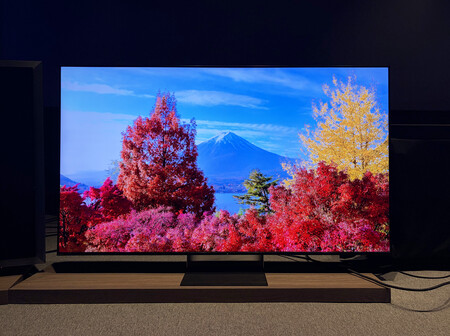
The battle for the best image quality in our living rooms has evolved beyond a simple rivalry between OLED and Mini LED technologies. A new layer in the high-end market is emerging: LCD televisions with RGB backlighting aimed at enhancing color quality. Each manufacturer is staking its claim with unique branding, yet the underlying direction remains similar. This is where Sony steps in with its True RGB technology, accompanied by a powerful assertion of its vision.
This sets the stage for a conversation with Albert Gracia, Commercial Director of Sony Iberia. During a presentation focusing on the company’s 2026 RGB lineup, Sony demonstrated not just its new televisions, but also articulated why it believes True RGB marks a significant leap forward for the BRAVIA lineup. This leads us to a crucial question: what strategies is Sony employing in an increasingly competitive category, and why is the new BRAVIA 9 II positioned at the pinnacle of its offerings?
Sony Enters the RGB Battle with Two Proposals for the Spanish Market
Gracia does not present True RGB as an isolated technology, but rather as Sony’s response to a market flooded with similar RGB-named technologies. “Right now, many manufacturers are introducing products under the RGB banner,” he noted, before steering the discussion towards how Sony generates and controls backlighting.
Looking beyond Sony provides important context. For instance, Samsung offers the R95H in its Micro RGB family, TCL presents the RM9L RGB-Mini LED, and LG unveiled its Micro RGB evo AI, with the MRGB95 slated for 2026. Those names were not specifically mentioned by Gracia but serve as useful examples to navigate the market landscape.
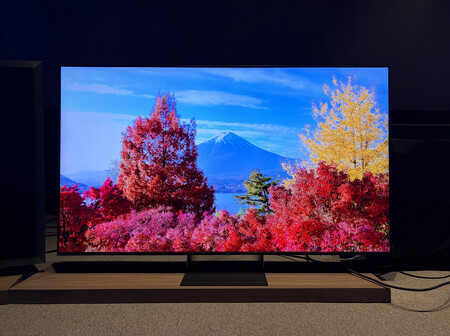
Sony BRAVIA 7 II
The goal of these advancements isn’t merely to add another label on the television box, but to tackle one of the most sensitive aspects of image quality: how the light we see is generated and transformed into color. The core idea is that RGB-based backlighting allows for more precise color purity and intensity adjustments. This leads to key promises for high-end models: greater color volume, improved gradation, and enhanced scene control.

In this realm, Sony aims to stand out. According to Gracia, True RGB utilizes a backlight made up of red, green, and blue diodes, but the company’s argument extends beyond just using three colors. The key, he notes, is Sony’s ability to “independently control each of these color diodes,” an approach deeply rooted in its prior experience with LED backlighting.
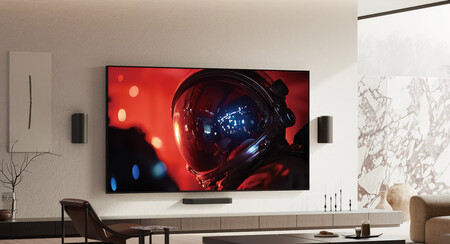
Sony BRAVIA 9 II
In Spain, Sony’s commitment is not a mere showcase of technology or a future promise. The company is launching two specific models for its 2026 lineup: BRAVIA 7 II and BRAVIA 9 II. The former expands the True RGB presence within the BRAVIA family, while the latter embodies the company’s highest ambition for image quality.
The significance of the BRAVIA 9 II is profound, as Sony presents it not only as its most advanced RGB television but also as the current benchmark for image quality. Gracia elaborates by comparing it with OLED models in their own catalog, a notable point since Sony retains OLED technology alongside models like the BRAVIA 8 II. This illustrates the hierarchy Sony seeks to establish around True RGB.
“For us, the BRAVIA 9 II is the pinnacle of image quality. We position it above OLED because we believe it offers the best image quality available right now. The initial market reactions, including pre-orders from consumers across Europe, have been outstanding,” he added.
This comparison with OLED transcends mere marketing talk. In the 65-inch showcase, the BRAVIA 8 II OLED 4K is offered at a reference price of 3,499 euros compared to the BRAVIA 9 II’s launch price of 4,299 euros. Although both models are currently significantly discounted, this does not alter the underlying narrative: Sony is preserving OLED technology in its high-end offerings while simultaneously positioning its new RGB solution on a superior tier within its BRAVIA lineup.
Images | Xataka
In Xataka | Haier launches its new 2026 TVs moving away from OLED and aiming for screens larger than 75 inches.