
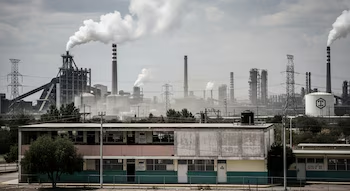
The Alarming Reality of Schools Near Pollution Sources
One in four schools in Mexico is alarmingly close to sources of industrial, mining, or energy pollution. This troubling statistic raises significant concerns about the right of millions of students to receive an education in safe and healthy environments.
Prevalence of Pollution Near Schools
According to a report by the Universidad Iberoamericana and the National Autonomous University of Mexico, approximately 26% of schools, or 57,000 campuses, are located less than five kilometers from pollution sources. These schools face continuous exposure to harmful substances, including lead, arsenic, and mercury, which can persist in the air, water, and soil for years.
Documented Cases Highlighting the Issue
Specific examples illustrate this issue, such as the foundry Met-Mex Peñoles in Torreón, the mine Buenavista del Cobre in Sonora, and the refinery Engineer Antonio M. Amor in Salamanca. In these areas, schools are often within close proximity to these contaminating industries, further compromising the health and learning potential of students.
Health Risks Associated with Pollution
The scientific evidence compiled by the Iberoamerican University indicates that prolonged exposure to these pollutants directly impacts the health and academic performance of children and adolescents. Some of the most common contaminants include:
Carbon Monoxide: Predominantly from vehicles and industries, it can lead to anemia and a lack of oxygen in tissues, with symptoms that range from fatigue to mental confusion.
Sulfur Dioxide: Arising from the combustion of fossil fuels, this pollutant causes respiratory distress and has been linked to increased mortality from chronic diseases.
Nitrogen Oxides: Emitted from power plants, these compounds damage lung function and can negatively affect plant life.
Hydrocarbons: Associated with the oil and automotive industries, these compounds harm the respiratory system and other forms of life.
Prolonged exposure to lead can result in severe health issues such as kidney damage, behavioral problems, and even cognitive impairments in children. Moreover, other industrial compounds like cadmium, asbestos, and benzene can lead to serious long-term health issues, including cancer and genetic abnormalities.
Implications for Education Quality
The Iberoamerican University’s findings emphasize that the issue encompasses more than just environmental concerns; it fundamentally undermines the right to quality education. Quality education is not solely defined by effective study plans or adequate infrastructure, but also by the environmental conditions present during teaching.
In communities where schools are situated in high-risk areas, environmental contamination becomes an additional barrier to learning, raising important questions regarding the viability of achieving educational quality under such circumstances.
Rethinking Education and Environmental Health
As the University Coordination for Sustainability emphasizes, it is crucial to reflect on whether it is possible to discuss quality education in contaminated environments. This contemplation urges a reevaluation of the relationship between environmental health and education. Without a safe environment, children cannot access their right to an education that is both safe and dignified.
In summary, addressing the pressing issue of pollution near schools in Mexico is essential not only for safeguarding the health of students but also for ensuring their right to quality education. It highlights the urgent need for collaborative efforts to clean up contaminated areas and protect young learners from hazardous exposures.