
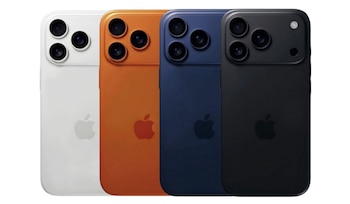
For this year, Apple is expected to welcome the iPhone 17 Air, a phone that will be thinner but will remain part of the entry-level range of this new generation, alongside the iPhone 17 base model.
The leaks released days before the official presentation, which will be on September 9, highlight a break from the continuity line observed in previous generations, with significant differences that go beyond size.
Since the iPhone 12, users have been accustomed to having, alongside the standard model, an identical variant in specifications but differentiated only by size, under the labels “mini” first and then “plus.”
These variations seem to come to an end in 2024, with the expected disappearance of the iPhone Plus and the debut of an Air model with its own distinct identity. The sources indicate that this new device will be far from being just a larger version of the iPhone 17.
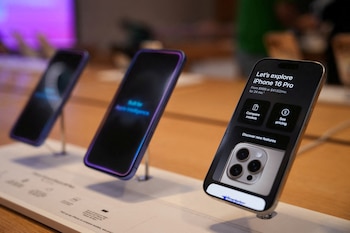
The iPhone 17 Air will introduce significant changes in design and hardware, aimed at a different audience willing to embrace key differences.
One of the main novelties lies in the design section. According to the leaks, the iPhone 17 Air is emerging as the thinnest terminal Apple has ever created. With a thickness that could be between 5.5 and 6 millimeters, it contrasts sharply with the approximately 8 millimeters of the standard iPhone 17 (the iPhone 16 had a thickness of 7.8 millimeters).
This ultra-slim design will require a titanium-based construction which, despite its larger dimensions compared to the base model, will allow the AIR model to remain lightweight.
The screen also continues to be a standout feature. The iPhone 17 has a 6.3-inch OLED panel with a variable refresh rate, similar to the AIR, which expands the diagonal to 6.6 inches. Both devices will offer premium visual quality; however, the AIR model’s larger dimensions cater to those who prefer larger devices without compromising on handling comfort offered by the reduced thickness.
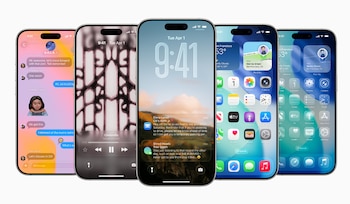
Both models will feature OLED screens and a 120 Hz adaptive refresh rate. Beyond the reduction of thickness, the iPhone 17 Air will be taller and wider compared to the conventional iPhone 17. Although specific figures vary, estimates suggest a height of approximately 14.7 centimeters and a width of 7.6 centimeters for the standard version, with the Air model likely extending beyond these dimensions.
The use of titanium is expected to offset the weight, resulting in a larger device that feels lighter than the iPhone 17 itself.
Both smartphones will utilize the A19 processor family manufactured by TSMC in a 3-nanometer third generation, although each model will house a different variant. The iPhone 17 will be equipped with the standard A19, whereas the iPhone 17 Air will feature the more advanced A19 Pro.
This distinction signifies a notable difference, as the Air chip, while not as powerful as the chips in the iPhone 17 Pro and Pro Max, will nonetheless offer enhanced graphic capabilities by integrating a GPU core compared to the standard model.
RAM is another area where a clear distinction will be made: 8 GB for the iPhone 17 versus 12 GB for the iPhone 17 Air. This increase will improve multitasking capabilities in the Air model, positioning it closer to Apple’s high-end offerings.
In terms of photography, another significant divergence emerges. The iPhone 17 will maintain a rear camera configuration featuring a 48-megapixel main sensor capable of 2x zoom and a 12-megapixel ultra-wide-angle lens.
In contrast, the iPhone 17 Air will simplify its photographic setup to a single rear camera with 48 megapixels. This decision represents a significant trade-off for those who value landscape photography, as the ultra-wide-angle feature will be missed.
The new design has also led to a decrease in battery capacity. The iPhone 17 Air will house the smallest battery among the four variants planned for this year, estimated at around 2,800 mAh compared to the 3,600 mAh of the iPhone 17.
This reduction will likely result in two hours less battery life compared to the standard model. In response, Apple is expected to introduce new accessories, such as battery cases, along with enhancements in software via iOS 26 to optimize energy consumption through AI.