
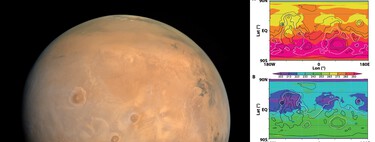
Elon Musk’s vision of making humanity a multiplanetary species rests largely on the ambition to colonize Mars. He considers the Red Planet a potential “lifeboat” for humanity in the event of a catastrophic event on Earth. The driving force behind SpaceX’s Starship program is Musk’s determination to construct a powerful rocket capable of transporting humans to Mars, a project that has mobilized billions of dollars.
The Three Scenarios of Adam Becker
Despite the excitement surrounding Musk’s Martian aspirations , many scientists remain skeptical about the feasibility of colonizing Mars. Their concerns don’t stem merely from the Starship’s repeated failures but from deeper, more significant issues. According to astrophysicist Adam Becker , there are myriad reasons why it could be a bad idea to colonize Mars. “It’s not that we will never have the technology to live on Mars,” Becker argues, “but rather that Earth will always be a better option no matter what happens.” He further describes Musk’s dream as “one of the most foolish things someone could say.”
In a compelling interview with Rolling Stone, Becker criticizes what he terms the “messianic fantasies” of tech oligarchs, starting with Musk’s Martian vision. He offers three apocalyptic scenarios to illustrate his point: 1) An asteroid impact similar in scale to the one that wiped out the dinosaurs. 2) The detonation of all the planet’s nuclear weapons. 3) The worst-case scenario of climate change. “Even in those situations,” he argues, “Earth would still be more habitable. A superficial glance at Mars makes that abundantly clear.”
Devastated Earth vs. Current Mars
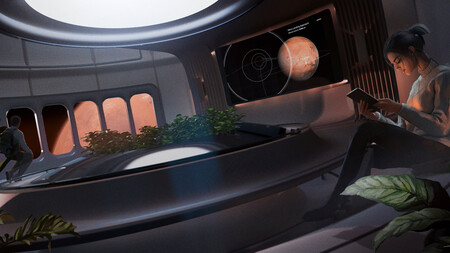
To grasp the vast differences between a devastated Earth and the Mars we currently know, it’s vital to understand essential habitable conditions for humans. Earth, though polluted, possesses a dense atmosphere rich in nitrogen and oxygen with a sea-level pressure of about 1 bar . In contrast, Mars’s atmosphere is extremely thin—only 0.6% that of Earth—composed mainly of 95% carbon dioxide . This environment is unbreathable, with a surface pressure of 0.006 bars that causes liquid water to sublimate rather than boil.
Earth’s magnetic field continues to protect it by deflecting much of the solar and cosmic radiation. Even a polluted atmosphere provides an additional layer of protection. Mars, however, lacks a global magnetic field; its surface suffers continuous bombardment from radiation that would be lethal for humans over extended periods. The average temperature on Mars stands at a chilling -63°C . Water exists only in the polar ice caps or underground. While Earth could experience catastrophic events like a nuclear winter with asteroid impacts, its oceans could act as a massive thermal regulator, retaining 1.4 billion cubic kilometers of water even if it’s contaminated or partially frozen, making it accessible and treatable.
Post-catastrophe, Earth would still contain organic matter and essential components for life within its soil. Geothermal and oceanic habitats would likely sustain microbial life, even if other forms have disappeared. On the other hand, Martian soil is toxic, containing elevated levels of perchlorates , harmful compounds that pose significant challenges for agriculture.
Can Mars be Terraformed?
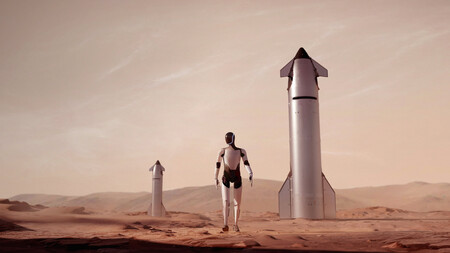
Musk envisions a gigantic pressurized base beneath Mars’s surface. However, the central pillar of his vision hinges on the potential to terraform the planet. This endeavor transcends merely transporting millions of tons of cargo to construct a habitable city; it’s a significantly grander project.
Various ideas have emerged for terraforming Mars, but the mega-engineering involved presents considerable hurdles. The first step would require raising Mars’s temperature . Proposals range from nuclear bomb detonations to placing massive orbital mirrors that focus sunlight onto the polar ice caps. Heating the polar ice could lead to the sublimation of water and carbon dioxide, thickening the atmosphere.
In theory, a denser atmosphere would trap more heat, releasing additional gases from the poles and surface, creating a positive feedback loop that would increase pressure and temperature, potentially allowing liquid water to exist on Mars’s surface. However, studies cast doubt on whether Mars has enough CO2 to achieve this effect.
Even if all accessible CO2 from the polar caps and surface minerals were released, Mars’s atmospheric pressure would only reach approximately 7% of Earth’s atmospheric thickness. Becker’s assertion gains even more weight in this context.
Transforming Mars into a habitable planet may be virtually impossible. Instead, living there would necessitate a total dependence on incredibly complex and vulnerable artificial habitats . Logic dictates that any efforts and resources would be better spent preserving and, if needed, repairing our existing support system that functions flawlessly: Earth.
Despite these challenges, considering the current trajectory of our world, having a Plan B isn’t a terrible idea. Even if we were to send volunteers to live on a planet worse than Earth, it may be worth it for future generations to explore the possibility of returning home.
Images | SpaceX
In Xataka | An American physicist has discovered a shortcut to reach Mars in 90 days, crucial for surviving radiation.
In Xataka | China has recently solved two issues regarding Mars conquest: it knows how to convert CO2 into electricity and batteries.