
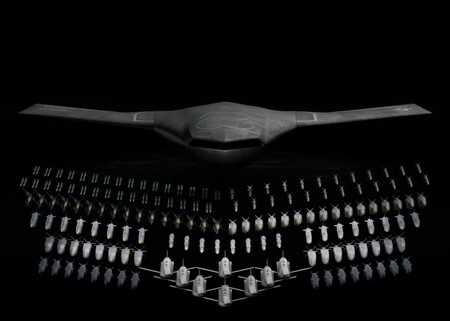
The United States is seeing groundbreaking advancements in artificial intelligence with companies pushing the frontier beyond traditional boundaries. One such company, Shield AI , is making significant strides toward transforming military aviation with its latest project—the X-BAT . This advanced combat aircraft, capable of vertical take-off and landing , is not just lauded for its design but also for its AI pilot , named Hivemind , which is engineered to make autonomous decisions mid-flight. The mission is clear: to showcase a machine that can effectively conduct complex military operations, potentially outperforming human pilots.
Founded in 2015 , Shield AI has swiftly evolved from a modest startup into a critical player in the defense industry. Valued at an impressive $5.3 billion following its recent funding round, the company boasts contracts with essential organizations like the U.S. Coast Guard , which awarded a nearly $200 million contract for its V-BAT drone in 2024 . This remarkable growth spurred a renewed commitment to harnessing artificial intelligence, placing Hivemind at the very core of its strategy and future innovations.
Revolutionizing Air Power: Autonomy and Cost-Effectiveness
The X-BAT isn’t merely a combat aircraft; it represents a pivotal shift in aerial capabilities. Its unique ability to operate from ships, unpaved islands, or makeshift bases, thanks to its vertical takeoff and landing feature, sets it apart from conventional fighters that demand runways. With a range exceeding 2,000 nautical miles (approximately 3,700 km ) and a ceiling of over 50,000 feet , it aims to redefine battlefield autonomy. Its compact structure—boasting a wingspan of about 12 meters —enables efficient transportation and storage, allowing three units to occupy the space of a single traditional fighter.
However, the X-BAT’s transformative potential lies not in its physical form but in the intelligence system that drives it. According to Shield AI , Hivemind has been validated across various platforms and real-world testing environments. Remarkably, it can function even in the absence of GPS or communications, allowing it to maintain mission parameters in scenarios where human pilots may struggle. Operating on principles akin to the military’s OODA loop (Observe, Orient, Decide, Act), Hivemind can make critical decisions in mere milliseconds.
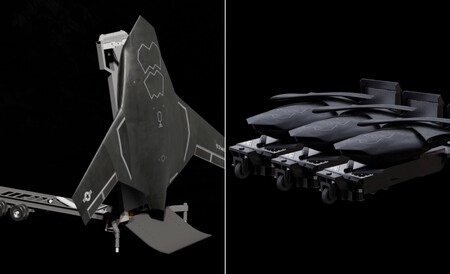
The operational capabilities of the X-BAT are robust. Designed to engage in combat, it can carry air-to-air and air-to-ground munitions in both internal compartments and external mounts. Capable of housing various munitions—from lightweight missiles to long-range assault weaponry—it incorporates an impressive suite of sensors, including an electronic warfare package to ensure operational efficacy even in challenging signal environments. The ambition of the X-BAT is to synergize stealth , autonomy , and offensive capability into one consolidated platform.
The economic advantages of the X-BAT present another compelling narrative. Shield AI touts the unit cost of the X-BAT as significantly less than traditional fighter jets, which often exceed $100 million per unit. This cost reduction implies not only lower initial investment but also the possibility of deploying larger numbers of aircraft, thereby increasing operational sorties. However, achieving this projected cost-efficiency will depend on economies of scale , supply chain management, and maintenance protocols, which still have to be validated in full-scale production.
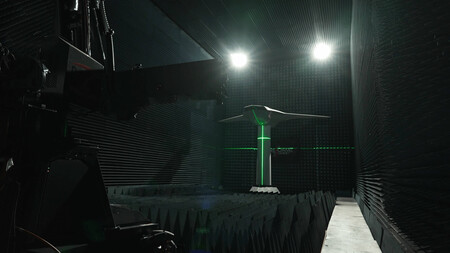
Shield AI pledges that development is on track, having successfully completed wind tunnel tests, engine trials, and structural assessments, alongside radar signature evaluations. The anticipated timeline includes the first flight tests with vertical take-off and landing slated for 2026 , aiming to reach operational capability by 2028 and production by 2029 . Although this schedule remains internal and not legally binding, it signifies a serious commitment to rendering aerial autonomy an operational reality.
The autonomy promised by the X-BAT also raises concerns about digital security . AI-controlled systems rely heavily on intricate software and network structures, making them susceptible to potential tampering. Interference or alterations to the data being processed may lead to unintended behaviors. Currently, Shield AI has not disclosed how it intends to secure the aircraft’s information streams, although it’s common in defense projects for certain technological details to remain confidential.
In summary, Shield AI is setting a new paradigm for military aviation with the X-BAT, which could significantly alter how aerial combat is approached. As they progress toward their ambitious timelines, the intersection of advanced AI and defense technology may well redefine the future of warfare.
Images | Shield AI