
I propose a mental exercise: close your eyes for a moment and try to remember what perception you had of most of the Chinese products a decade ago. With a few exceptions, you probably associated them with cheaper and lower-quality alternatives than their Western equivalents. We talk about everything: from smartphones to cars.
But something changed during this time. The Asian giant has completely transformed its role in the global economy, causing a real earthquake in multiple industries. Today, consumers—people like you or me—already have a very different perception when we see a label that says “Made in China.” And the question is inevitable: how did they achieve it?
How China is Moving from Assembly to the Forefront
On the YouTube channel where formats such as 24/7, the series Domotize or Die Trying, and Science and Apart coexist, we launch a new Xataka Presents dedicated precisely to understanding that transformation. Ana Boria invites us to look beyond the headlines to discover how China went from being the world’s factory to becoming a true technological benchmark.
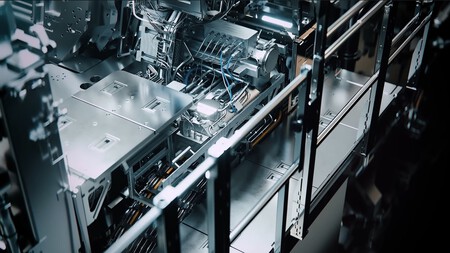
“The tension between the US and China for more than five years is due to a very obvious purpose: these two countries are disputing for world supremacy, and it is no secret,” explains our colleague. He also remembers how, in recent years, the administration of an American president recognized something that few in his country wanted to hear.

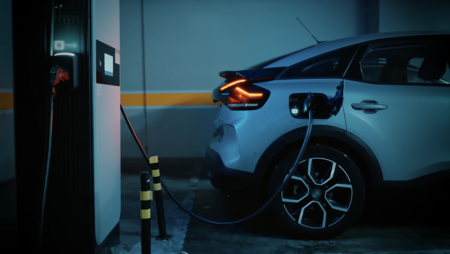
With its Made in China 2025 plan, the country set an ambitious roadmap to lead in a wide range of strategic sectors. Some of them are obvious, such as the automotive industry. “It manufactures 57% of electric car batteries in the world,” says Ana, who delves into why control of the battery ecosystem is key to understanding the rise of BYD, OMODA, or JAECOO.
But the list does not end there. “China controls 90% of the world market for drones, both those used to record professional video and those used for agriculture or security.” DJI, its flagship manufacturer, has also become a reference brand among content creators thanks to its cameras and microphones.
“China controls 90% of the global drone market.”
The industrial muscle of the country led by Xi Jinping even extends to rail transport, where it dominates with the largest high-speed network in the world, and to materials, with examples as relevant as graphene. “Furthermore, they consider it strategic so they invest millions in research for applications in medicine, energy, and electronics. The result is that they control 83% of the market in Asia and the Pacific.”
Ana also reviews the reaction of the United States to the Chinese advance, both in terms of innovation and trade restrictions. It brings an important point to the table: not everything in this plan is brilliant. China is still years away from its competitors in certain sectors, although its pace of progress seems unstoppable. You can discover it in the full video available on the Xataka YouTube channel.
Images courtesy of Xataka. Thrust by rapid industrial development and strategic investments in technology, China has transitioned from being seen as the world’s factory to a dominant player across various industries. This remarkable evolution reflects not just a change in production but a comprehensive strategy aimed at leading the global market.