
| IN BRIEF |
|
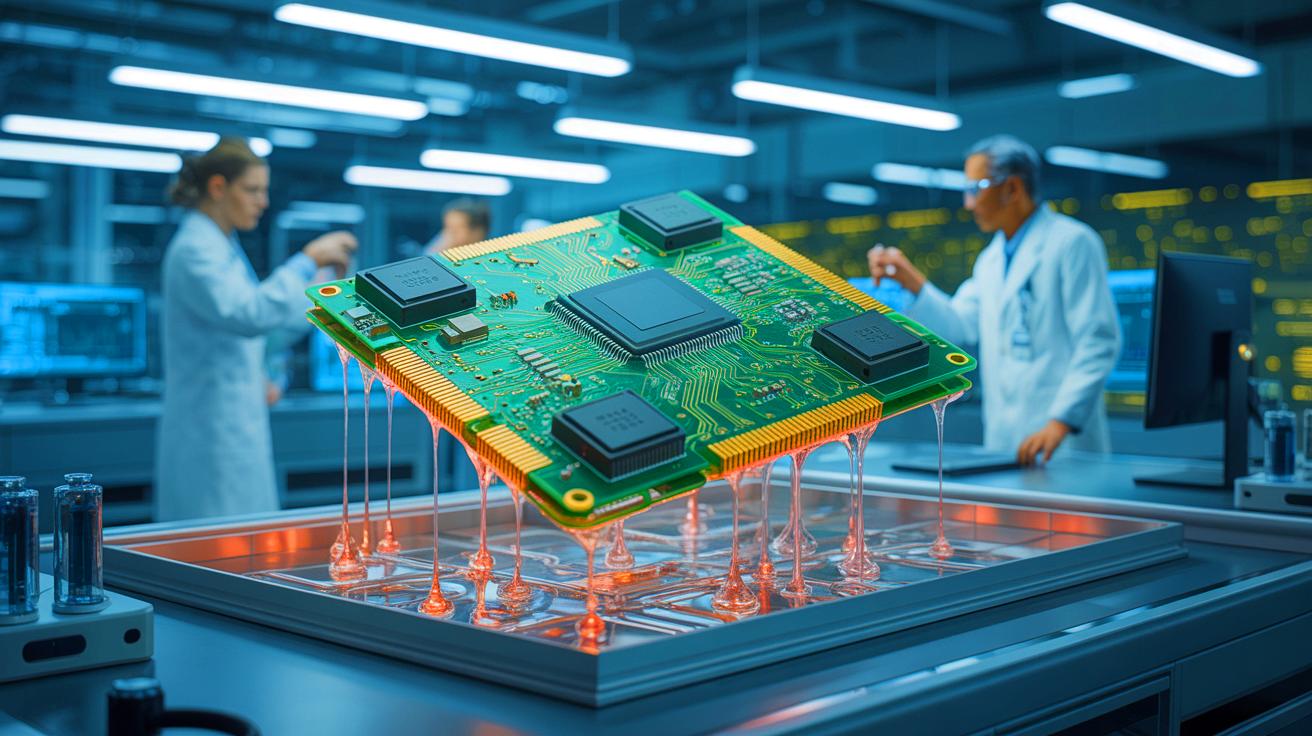
Electronic waste , or e-waste, poses one of the major environmental challenges today. The accumulation of this waste, driven by our growing consumption of electronic devices, fuels a global crisis. In response to this alarming situation, researchers from Virginia Tech have developed an innovative printed circuit board that could transform how we handle this waste. With its ability to recycle, repair, and reshape itself, this new material presents a potential solution to this pressing issue.
A Revolutionary Material to Reduce E-Waste
Globally, the amount of electronic waste has nearly doubled in twelve years, rising from 34 million tons to 62 million tons . This alarming increase equals approximately 1.55 million cargo trucks. Forecasts suggest that this figure may reach 82 million tons by 2030. However, only 20% of this waste is currently recycled, amounting to around 3.8 million tons . This situation is clearly unsustainable.
In this context, Michael Bartlett , an associate professor of mechanical engineering, and Josh Worch , an assistant professor of chemistry, have collaborated to develop a novel material. The core of this material is a vitrimer , a type of plastic that can be reshaped or recycled through the application of heat. Unlike conventional plastics, known as thermosets , which are permanent and difficult to recycle, the vitrimer offers a new avenue for sustainability.
When liquid metal droplets are incorporated into this material, it not only conducts electricity efficiently but can also “self-repair” when heat is applied. This ability to reshape and decompose through alkaline hydrolysis allows for the recovery of valuable components, such as LEDs and liquid metal, thereby presenting a promising outlook for reducing electronic waste.
A Self-Repairing and Reshapeable Printed Circuit Board
The recycling of traditional printed circuit boards is not only costly but also generates significant waste. This new material, however, simplifies the recycling process for electronic devices by enabling the recovery of more components while reducing the amount that ends up in landfills.
According to Bartlett, “Our material is different from conventional electronic composites. Printed circuit boards are remarkably resilient and functional. Even when damaged or deformed, they continue to operate.” In a press release from Virginia Tech, he emphasizes that this new dynamic composite can be repaired or reshaped in case of damage by applying heat without compromising electrical performance.
Worch adds, “Traditional printed circuit boards are made from permanent thermosets, which are extremely challenging to recycle. Here, our dynamic composite can be repaired or reshaped in case of damage with heat application, which modern printed circuit boards simply cannot do.” This technology could substantially enhance our approach to e-waste management.
Environmental and Economic Implications
The environmental benefits of this technology are undeniable. By reducing the volume of electronic waste destined for landfills, this material could play a pivotal role in preserving our environment. Recoverable components, such as LEDs and liquid metal, also represent significant economic opportunities.
Indeed, the retrieval of these valuable materials could not only reduce production costs of new devices but also encourage the development of a more robust circular economy . Businesses that choose to adopt this technology could see cost reductions while contributing to environmental sustainability.
This innovation also paves the way for further research and development in the realm of recyclable and self-repairing materials, prompting industrial innovation and increasing interest in environmentally friendly solutions in the tech sector.
Toward a More Sustainable Future
As global demand for electronic devices continues to rise, finding sustainable solutions to manage e-waste becomes imperative. Researchers at Virginia Tech have made a significant stride in this direction with their new material. Although challenges remain to commercialize this technology on a large scale, the prospects are promising.
This technological advancement could indeed transform our approach to electronic waste and help establish a future where sustainability and innovation go hand in hand. Ultimately, the question remains: how will we integrate this revolutionary material into our industrial and daily practices to maximize its environmental and economic benefits?
The author has utilized artificial intelligence to enhance this article.
Did you enjoy it? 4.4/5 (29)