
| IN SUMMARY |
|
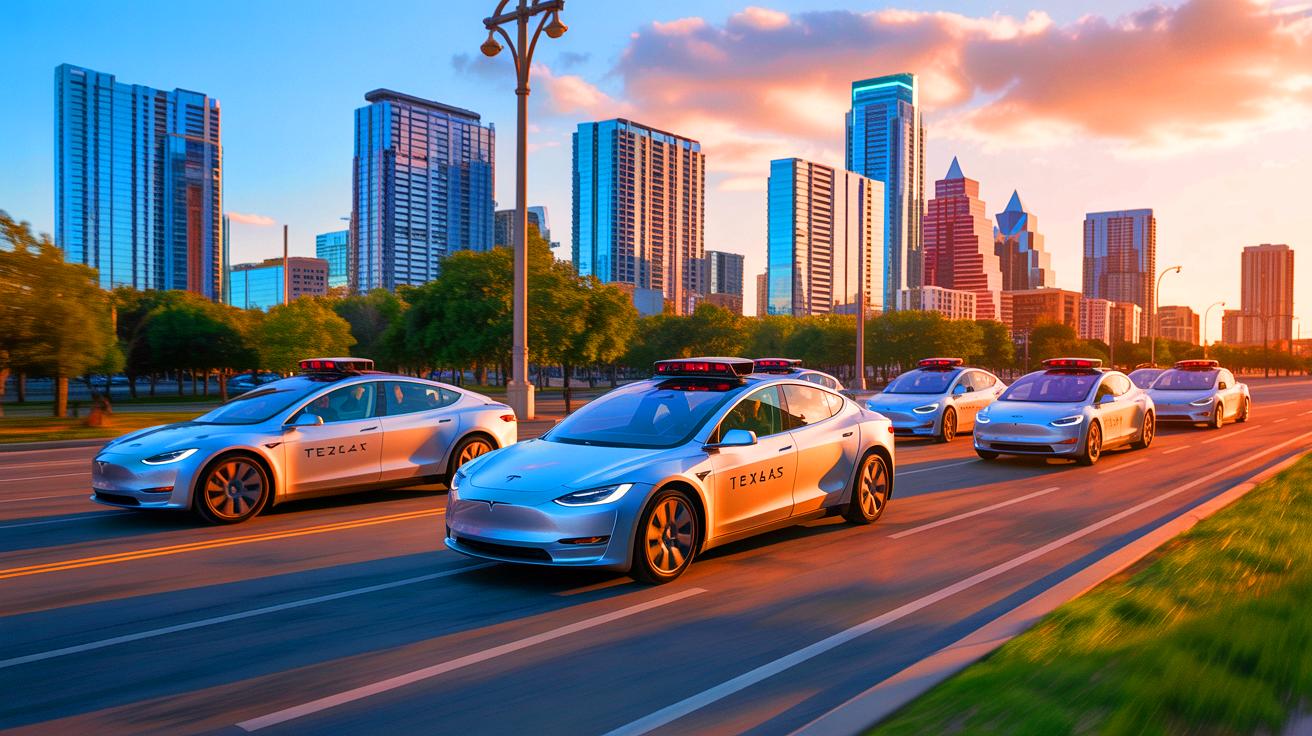
Elon Musk, the visionary CEO of Tesla, recently shared exciting details about the launch of Robotaxis in Austin this June. This announcement promises to transform the urban landscape with autonomous vehicles, but it also raises questions about the safety and impact of this technology. By meticulously controlling the initial deployment, Tesla appears to be committed to ensuring that this new era of transportation unfolds smoothly while paving the way for a future where driverless vehicles are the norm.
A Controlled and Measured Deployment
Tesla’s strategic choice to launch the first trial of Robotaxis with a limited fleet of 10 Model Y vehicles demonstrates the emphasis placed on safety . Elon Musk explained that this approach would allow for strict oversight of the quality and reliability of the services provided. By opting for a gradual deployment , Tesla can identify and address potential issues before scaling up.
Ultimately, Musk envisions scaling to 1,000 Robotaxis once confidence in the system has been established. This cautious approach is vital to avoid incidents that could tarnish the reputation of this groundbreaking innovation.
Restricted Geographical Zones for Enhanced Safety
To ensure optimal safety, Tesla has decided to limit the access of Robotaxis to specific areas of Austin. These carefully selected zones allow Tesla to mitigate potential risks for passengers. This geofenced strategy ensures that early adopters will not be placed in potentially hazardous environments.
While some may be disappointed by these initial restrictions, it is crucial to recognize that this caution is necessary for the safety of passengers and the long-term viability of the project. A serious incident could jeopardize the future of this revolutionary technology.
Driverless Operation
The question of whether a human driver will be present in the Robotaxis has been a significant concern. In previous trials aimed at employees, a driver was always present to ensure safety. However, Musk has confirmed that, during the official launch in June, the Robotaxis will operate without a driver , marking a critical milestone in the evolution of autonomous driving.
This aspect of the project is particularly innovative, as it will be the first time Tesla deploys fully autonomous vehicles on public roads. This technological advancement could redefine our relationship with urban transport and open up new possibilities for personal mobility.
Licenses for Full Autonomous Driving
For a long time, Tesla has considered sharing its complete autonomous driving technology with other automakers. Although discussions are underway with several major industry players, no formal agreements have yet been signed. This strategy could enhance Tesla’s leadership position in the autonomous mobility market.
By collaborating with other manufacturers, Tesla could accelerate the widespread adoption of autonomous driving while generating new revenue streams. This move underscores Tesla’s commitment to playing a pivotal role in the shift towards a more sustainable and secure mobility landscape, sharing its expertise across the automotive industry.
As Tesla prepares to launch its Robotaxis in Austin, several questions remain regarding the impact of this technology on safety, the local economy, and the environment. How will this innovation influence our daily lives, and what are the next steps for Tesla and its partners in the era of autonomous driving?
The author utilized artificial intelligence to enrich this article.