
The Earthquake that Revealed the Milky Way
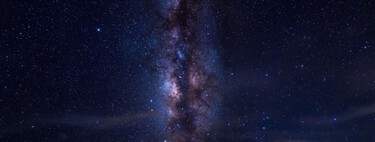
On January 17, 1994, the San Fernando Valley experienced a powerful earthquake measuring 6.7 on the Richter scale, shaking Los Angeles with forceful tremors. In the aftermath, emergency lines were flooded with calls from anxious residents. Among the standard calls of distress, one particularly curious inquiry emerged repeatedly: neighbors were terrified by a brilliant silver strip visible in the night sky. This shimmering band was actually the Milky Way, revealing how light pollution obscured it from the eyes of many city dwellers.
An Unseen Spectacle: The Milky Way
What the residents of Los Angeles witnessed was not a crack in the sky but rather the majestic Milky Way. Many had never ventured beyond the city’s bright lights, which prevented them from experiencing this celestial wonder. This incident underscores the pervasive issue of light pollution that cloaked the city even in the early 1990s, creating a poignant example of how urban life can obscure natural beauty.
Understanding Light Pollution
Why Can’t We See the Stars?
Light pollution results from artificial illumination emanating from streetlights, monuments, and commercial signs. This light scatters in the atmosphere, illuminating the sky and diminishing the contrast necessary to see stars and celestial phenomena. As a result, the Milky Way appears as a faint haze against the backdrop of a lit-up urban sky. Many city dwellers may live their entire lives without witnessing its grandeur.
The Dual Threat of Urban Living
The problem of light pollution intensifies in major cities like Los Angeles, where there is an abundance of artificial lighting compounded by air pollution. Particles suspended in the atmosphere exacerbate the scattering of light, drowning out the beauty of the stars. Consequently, it’s no surprise that many Los Angeles residents have never laid eyes upon the Milky Way.
The Situation Today: A Worsening Crisis
Over three decades have passed since that fateful earthquake, yet the issue of light pollution remains unresolved. While there is growing awareness and some municipalities have begun to implement lighting strategies informed by astronomers and environmentalists, the overall situation continues to deteriorate. Roughly 80% of the world’s population now lives beneath light-polluted skies, making the night sky a rare sight for many.
A Grimmer Reality
Research published in 2024 revealed sobering statistics: 60% of Europeans and 80% of Americans have never seen the Milky Way. The anecdotal experiences of Los Angeles residents who mistook the Milky Way for a celestial rupture are merely a microcosm of a far larger problem. The heavens as we once knew them are vanishing, and if light pollution persists unaddressed, future generations could miss out on witnessing the vastness of the night sky.
In conclusion, the Milky Way, an eternal cosmic fixture, remains hidden from many urban eyes due to the consequences of light pollution. As we confront the challenges of modern living, it becomes vital to advocate for change and initiate solutions that honor and preserve the natural wonders above us. The beauty of the universe should not be a luxury—let’s work towards a future where everyone can gaze upon the magnificence of the Milky Way.