
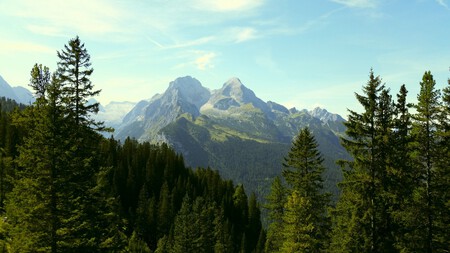
The Consequences of Monoculture in the Italian Alps
The ecologist Aldo Leopold once famously stated, “maintaining each piece is the first rule of ecological intelligence.” This insight, articulated in 1949, highlights the hidden repercussions of disrupting ecosystems, as evidenced by recent studies conducted in the Italian Alps.
A Forest that Seemed Like a Solution
In the 1930s, Benito Mussolini’s regime initiated a program to stabilize the Alps by planting trees. The rationale behind this scheme was to combat erosion, ensure a sustainable timber supply, and present an image of national productivity. The chosen species, Norway spruce, is a fast-growing conifer that promised immediate results.
However, this decision led to the destruction of vast expanses of alpine meadows and native forests to make way for these dense plantations. Initially perceived as a success story in forestry engineering, research now reveals an alarming truth: this initiative has drastically reduced the biodiversity of the region.
Ninety Years Later: The Ecological Toll
Recent research led by ecologist Gianalberto Losapio, published in the journal Ecology, examined the effects of these spruce plantations on local biodiversity near Lake Como, specifically at Monte Bisbino and Vicere Alp. Over five months, researchers documented a mere seven plant species per plot in spruce plantations compared to 18.5 in native forests and 37 in grasslands. This translates to more than 50% less biodiversity in these monocultures.
The Dangers of Monoculture
The core misunderstanding behind these plantations was the belief that more trees meant more nature. Monocultures can appear productive but often lead to ecological traps. The simplification of ecosystems into uniform plantations comes at the cost of resilience against diseases and extreme weather. The diverse landscapes that once thrived in the Italian Alps have been largely replaced by blocks of similar-looking conifers, resulting in a loss of both variety and ecological function.
The Shadow of Spruce: Implications for Soil and Biodiversity
Beyond the impact on plant diversity, the presence of Norway spruce has profound implications for soil quality. The tree’s needles acidify the soil, leading to a build-up of organic matter that decomposes at a slower rate, suggesting decreased biological activity. The ecological balance of carbon and nitrogen cycles becomes disrupted, indicating a failed nutrient recycling system where organic debris accumulates without effective breakdown.
A Fragile Future and a Global Lesson
While the immediate recovery of insect diversity appeared somewhat promising, experts caution that even soil arthropod populations may be affected by underlying changes in soil chemistry. The Norwegian spruce did not foster a new ecological community; it merely diminished the existing one, leading to a situation where the forest remains but functions far less effectively.
The lessons from the Italian Alps extend beyond historical context, serving as a stark reminder of modern reforestation practices. Globally, many restoration initiatives continue to engage in similar monoculture approaches, jeopardizing ecological integrity for short-term gains. The Italian Alps illustrate that quick fixes come with long-lasting ecological damage, a cautionary tale for future sustainability efforts.
Ninety years later, the question remains: will the biodiversity that once flourished in the Italian Alps ever return?