
## The Unexpected Discovery of a Medieval Notebook
You know it and I know it: those few minutes we spend in the bathroom are ideal for catching up on social media, sending messages, or even answering emails. While the use of smartphones in toilets has raised eyebrows—some studies even link it to medical issues like hemorrhoids—the practice of reading or writing while on the toilet is not new. For centuries, people have turned to various forms of reading material while seated on the porcelain throne.
### A Glimpse into History
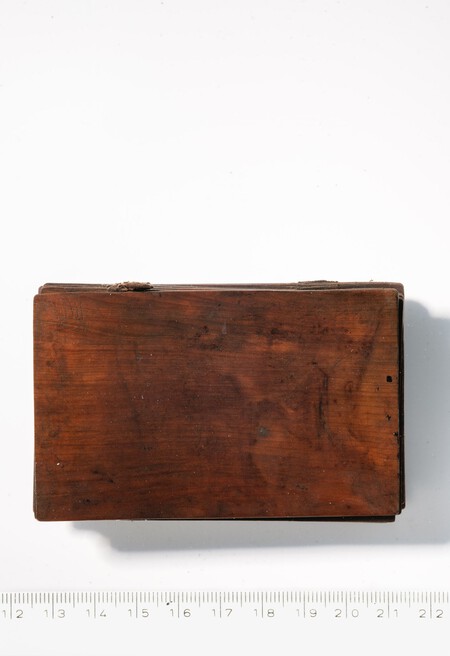
Imagine the surprise of archaeologists when they unearthed a notebook from a latrine that dates back to between the 13th and 14th centuries. Found in Paderborn, Germany, this notebook made of wood, leather, and wax is exceptionally well-preserved, offering a fascinating insight into daily life during the medieval period. Archaeologist Barbara Rüschoff-Parzinger noted that it is the only complete specimen of its kind in the region, making this find extraordinary.
### The Anatomy of the Notebook
This remarkable artifact measures just 10 by 7.5 centimeters and features ten double-sided wax pages, all housed in a leather cover adorned with a lily motif—a medieval symbol of purity and authority. Interestingly, the notebook was not designed for pen use; rather, it functioned more like a reusable blackboard. A stylus with a sharp tip engraves text, while the flat end is used for erasing, leaving remnants of prior notes on the wax pages.
### Contextualizing the Find
The notebook wasn’t discovered alone. Among the artifacts recovered from five latrines were barrels, knives, complete ceramic vessels, fabric remnants, and even fragments of basketry. The context helps establish the dating of the notebook. According to archaeologist Sveva Gai, the area near the Abdinghof monastery was home to the urban gentry, shedding light on the social status of its likely owner, a merchant who engaged in trade, finance, and personal matters.
### Luxury Meets Functionality
In a surprising twist, the excavated silk fabric remnants suggest that even luxury items were repurposed for more mundane uses, possibly as makeshift toilet paper. This indicates not only the riches of the area but also the lifestyle choices of its inhabitants, who may have discarded fine textiles in favor of practicality.
### Preservation Against All Odds
In a remarkable turn of events, the notebook’s excellent preservation can be attributed to its environment in the latrine. Bacteria responsible for the decomposition of wood and leather could not survive in the high-humidity, low-oxygen conditions, allowing the notebook to endure for over 700 years.
### The Mystery Remains
Despite the fascinating details unearthed about the notebook and its possible owner, the mystery of how it ended up in a latrine remains unsolved. Gai suggests it might have been an accidental drop. However, linking the latrine to historical archives could potentially reveal the name of the notebook’s owner. Meanwhile, the ongoing examination aims to uncover layers of erased writing from previous notes still hidden beneath the wax, holding untold stories yet to be revealed.
—
This remarkable find not only brings us closer to understanding medieval life but also showcases the enduring connections we have through time, even in the most unexpected places.