
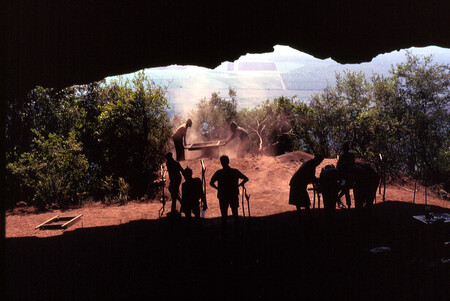
Prehistoric Innovations in Rest: The Case of Border Cave
We know that bed frames emerged a long time ago. Ancient Egyptians left evidence of cots, including foldable designs found near Tutankhamun’s tomb, which date back more than 5,000 years. But how did our prehistoric ancestors manage to rest? Did they have beds? Recent excavations in a remote cave located on the border of South Africa and Eswatini have begun to answer these intriguing questions.
The Science of Sleep
Few things come as naturally to humans as sleeping, yet the science behind it is complex. Archaeologists studying Border Cave, a site that spans from the Paleolithic to the Iron Age, have made some groundbreaking discoveries about prehistoric sleeping arrangements. This cave, known for its rich archaeological context, has provided fascinating insights into the sleeping practices of early humans.
For nearly 90 years, experts have occupied themselves with excavating this cavern, and their continuing studies have yielded valuable information. Recent microscopic analyses have revealed six distinct microfacies, showcasing remains that indicate the existence of various types of prehistoric “beds” made from plants and ash.
Importance of the Findings
The findings from Border Cave are significant due to the extensive time frame of around 220,000 to 43,000 years. Researchers have identified bed remains dating as far back as 200,000 years ago. While similar studies have taken place in other South African locations like Shibhudu and Diepkloof, the level of detail at Border Cave has allowed for a deeper understanding of these early resting areas.
The Make-up of Prehistoric Beds
Researchers concluded that the beds were primarily constructed from Panicoideae, a subfamily of grasses and reeds. The inhabitants of Border Cave innovatively crafted different types of beds, some showing similarities to other African sites while others were noticeably distinct.
A study published in the Journal of Archaeological Science elaborates on the six stratigraphic microfacies identified at Border Cave, highlighting both similarities and unique features compared to previously studied sites.
The Role of Ash
Archaeologists also uncovered significant ash deposits beneath the plant beds, which opens a window into how these early humans prepared their sleeping areas. Ash might have served to keep their resting spots warm and dry and deterred insects. Another hypothesis suggests that the inhabitants may have burned old vegetation to clear space for fresh materials. The act of constructing and maintaining these plant-based beds aligns with ongoing research focused on the origins of modern human behaviors.
Variations Over Time
Interestingly, variations exist within the cave’s layers, highlighting differences in bed construction and maintenance. Newer beds, dating between 60,000 and 43,000 years ago, were less fragmented and appeared to be less worn compared to older layers. The evidence suggests that the practice of strategically placing ash prior to bed construction was common among various occupations of the cave.
With these discoveries, Border Cave stands out as a testament to the ingenuity of our ancestors. Understanding how they adapted their sleeping environments can shed light on their daily lives and evolving behaviors.
Images related to this study can be found on Wikipedia and another source.