
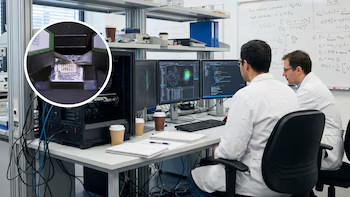
Japan’s Revolutionary Chip: A Game Changer for Computing
Introduction to the Breakthrough
A groundbreaking advancement in computer technology has emerged from researchers at the University of Tokyo: an experimental chip capable of enhancing processing speed by up to 1,000 times compared to traditional methods. This innovation not only ramps up speed but also addresses the persistent issue of heat generation that limits current processors.
The Heat Dilemma in Computing
For decades, the evolution of computer processors has been closely tied to the challenges posed by heat. As processing speeds have increased, so too has the heat generated by these chips. This phenomenon has led the computer industry to implement complex cooling systems, including large fans and specialized liquids, to maintain optimal operating conditions.
The energy consumption in modern data centers, largely driven by artificial intelligence (AI) demands, raises significant environmental concerns. According to the International Energy Agency, electricity usage in data centers could reach 945 terawatt-hours annually by 2030, surpassing the total energy consumption of many developed countries.
A Paradigm Shift in Electronics
The new chip deviates significantly from traditional electronic designs. Instead of relying solely on the movement of electrons through transistors, the innovative device utilizes the magnetic spin of electrons. This approach exploits quantum properties associated with the magnetic orientation of particles, creating a means for data representation and processing without the heat typically generated by electronic movement.
Technical Insights
The research team has developed a chip using materials like tantalum and manganese. When an electrical signal passes through tantalum, it initiates a subtle magnetic interaction recorded in the manganese. This magnetic state change reflects the storage of a single bit of information and occurs at an unprecedented speed—40 picoseconds—a fraction of the time required by existing technologies, which generally operate at around one nanosecond per cycle.
This leap in speed implies that computational tasks that currently demand about an hour could potentially be completed in as little as one second if the technology scales commercially.
Energy Efficiency and Sustainability
Beyond rapid processing capabilities, the energy efficiency of this new chip is striking. Tests show it can operate stably over 100 billion cycles without succumbing to overheating, a common pitfall in conventional chips. Projections indicate that these advanced chips could decrease energy consumption to one-hundredth of current levels, representing a significant step towards sustainable computing.
The Future of Computing
The arrival of this experimental chip heralds a pivotal shift in how we might approach computing in the future. The continued rise of AI and data processing demands necessitates a reevaluation of traditional electronic systems. Utilizing quantum and magnetic phenomena could pave the way for innovations that not only boost performance but also mitigate the environmental impacts of energy consumption.
In conclusion, Japan’s breakthrough in developing a chip that enhances speed without generating heat signifies a potential transformation for the computing industry, inspiring new strategies for tackling the burgeoning demands of artificial intelligence and data processing workloads. The future of computing may indeed lie beyond conventional electronics, embracing the frontier of quantum and magnetic technologies.