
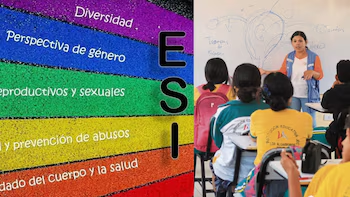
Sexual Education as a Right: Peru’s Essential Forward Motion
The Importance of Comprehensive Sexual Education
The ongoing retraction of sexual education in Peru, marked by the transition from Comprehensive Sexual Education (CSE) to a model centered solely on “scientific, biological, and ethical” perspectives, is a significant step backward. This shift jeopardizes fundamental rights and highlights a grave misunderstanding of the role that sexual education plays in establishing the health, autonomy, and dignity of children and youth. Education surrounding sexuality is not just an optional topic but a critical tool for fostering informed citizens.
Urgent Data and Realities
Current statistics paint a stark picture of the adolescent fertility rate in Peru, standing at approximately 43 births per 1,000 women aged 15 to 19, according to the INEI 2023. This reality leads to increased school dropout rates, deeper poverty, and greater risks to maternal and child health. International evidence is clear: comprehensive sexual education effectively reduces unwanted pregnancies, boosts contraceptive use, and lowers the incidence of sexually transmitted infections when delivered consistently and thoughtfully. Organizations like UNICEF advocate for tailored approaches from early childhood, emphasizing the importance of respect for boundaries and promoting healthy relationships.
The Pitfalls of a Reduced Curriculum
Unfortunately, the new sexual education model neglects vital areas that biological data alone cannot adequately address, including:
- Consent
- Prevention of gender violence
- Sexual diversity
- Reproductive health
- Socio-emotional skills essential for informed decision-making
Such omissions create voids filled with myths, misinformation, and stigma. When essential topics like contraception and healthy relationships are sidelined, children become vulnerable to avoidable risks.
Promoting Equality Through Education
Moreover, CSE serves as a foundational policy for equality. Given the alarming rates of violence against women and girls in Peru, instruction in gender equality and non-violent interactions is crucial for prevention. A solely biological approach fails to acknowledge the existing power dynamics and social norms that perpetuate discrimination. Ignoring the existence of LGBTI+ students does not erase their experiences but instead heightens their vulnerability. Schools must be safe havens that embrace diversity rather than censor it.
The Responsibility of the State
The role of the state is explicitly defined: to ensure inclusive educational policies grounded in evidence and human rights. This responsibility involves more than merely issuing guidelines; it requires robust investment in teacher training and the development of quality pedagogical materials. Furthermore, care protocols against violence must be established, with educational centers effectively coordinated with youth-friendly health services. Relying on “ethics” as a justification for educational omission is unacceptable; true ethical education protects individuals’ integrity and guarantees access to information that fosters responsible decision-making.
A Call to Action
As active citizens, there is an urgent need to demand that authorities reinstate a comprehensive approach to sexual education—one that is scientific, social, emotional, and based on rights. This inclusive model should integrate a gender perspective and actively involve children and youth in its design and evaluation. Restoring Comprehensive Sexual Education is not merely an ideological concession but a state obligation aligned with international standards and an investment in the future. Upholding CSE equates to championing public health, equality, and human dignity.
Let us ensure that Peru does not regress but progresses toward a more informed and equitable society.