
Extremadura’s Tobacco Crop: Growth Amid Uncertainty
Extremadura has launched its tobacco cultivation campaign, a key agricultural sector for both national and international markets. This region produces nearly 98% of Spain’s tobacco, with seedlings recently being transferred from nurseries to fields. The importance of this crop is not only a matter of local agricultural pride but also a significant economic factor, especially in areas like Campo Arañielo, La Vera, Alagón, Talayuela, and Navalmoral de la Mata.
Increased Land and Production
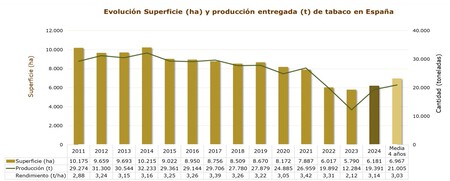
This year’s campaign features an expansion in cultivated land. The National Federation of Tobacco Growers has confirmed that approximately 6,496 hectares will be dedicated to tobacco cultivation in Extremadura, representing a nearly 7% increase from the previous year. Although this number is substantially lower than the 10,000 hectares cultivated a decade ago, it indicates a positive trajectory for the local tobacco industry.
In addition to increased acreage, there is also a notable uptick in the amount of tobacco contracted. The Interprofessional Tobacco Organization of Spain has projected a rise in reserve contracts to about 23.69 million kilos, a growth that is expected to bolster local incomes. However, local farmers remain concerned about the viability of this increase given the backdrop of rising costs for fuel and fertilizers, exacerbated by geopolitical instabilities, particularly the ongoing conflict in Iran.
The Double-Edged Sword of Expansion
Despite the optimism inherent in expanding production, it brings a sense of uncertainty. Farmers argue that more cultivated hectares do not automatically translate to increased profits. The 7% growth in planted area does not ensure a corresponding rise in harvested tobacco. Regulatory changes, particularly the restrictions on specific phytosanitary products, have intensified concerns about crop yields.
Economic and Social Dimensions
The impact of the tobacco sector reaches beyond agriculture, affecting around 20,000 families in Extremadura alone. It is estimated to generate approximately 69 million euros in added economic value, supporting around 1,050 direct jobs. Such economic contributions are critical for sustaining rural communities, where agriculture often forms the backbone of local employment and social structures.
The Wider Context: Trends and Challenges
While Extremadura is increasing its tobacco cultivation, the national trend reveals a significant decline in overall tobacco area over recent years. The European Union has observed a similar pattern, where tobacco cultivation has plummeted from 400,000 tons in the early ‘90s to just around 140,000 tons by 2018. This decline is largely attributed to rising health awareness and greater regulation on tobacco use and advertising.
Most concerning is the notable decrease in tobacco consumption, with only about 20.4% of the population smoking, a sharp decline from 32.7% two decades ago. In fact, daily smoking among youth has also plummeted, with only 4.3% of students aged 14 to 18 smoking regularly.
The Sector’s Perspective
Local leaders have voiced strong opinions about the future of tobacco cultivation, emphasizing the need for honest discussions about its place in both local and international markets. The ongoing restrictions on domestic production could lead to increased imports, negating the benefits of local cultivation.
As Extremadura navigates this complex landscape, its tobacco sector stands at a crossroads of opportunity and challenge. Finding a balanced approach that accommodates both growth and sustainability will be essential for the future of this critical industry.