
The Moment of Letting Go
There comes a precise moment when a breakup ceases to hurt: when you stop anticipating the pain. It’s when you can pass by that bar without your stomach clenching or hear that song on the radio without freezing in place. The human brain is designed for this; traumatic memories fade over time, losing their sharpness and ceasing to ambush us. This mechanism is crucial for survival; if we remembered every wound with the same intensity forever, we wouldn’t be able to endure.
The Constant Memory of the Internet
But the internet disrupts this evolutionary pact. The cloud does not forget, does not fade, and does not heal. Every photo remains high-resolution, each message retains its timestamp, and every playlist keeps the order of songs intact. Even worse, platforms have learned to serve up these memories when you least expect it—wrapped in algorithmic nostalgia and optimized for emotional engagement.
The Industry of Perpetual Memory
Silvia, a 31-year-old from Valencia, experiences this every few weeks. She broke up with Jorge a few months ago after three years together. It was a mature separation, devoid of drama. However, her iPhone doesn’t acknowledge this.
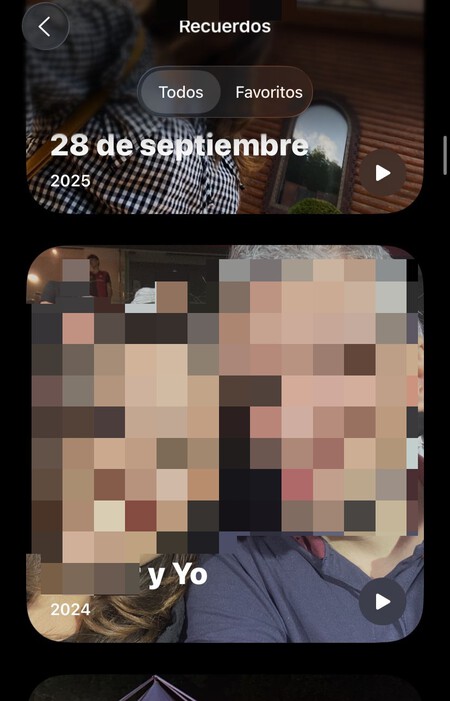
“Initially, it generated anger and stress to see those memories. Now, it’s just something else,” she explains, sounding resigned to her fate. The problem isn’t that the photos exist; it’s that they appear unexpectedly. Apps like Apple Photos aren’t passive albums you consult on your terms; they are hyperactive butlers interrupting your life to remind you of “the best moments from a year ago.” And there he is, smiling on that beach.
Design Against Grief
This isn’t accidental. When Apple or Google design their “memories” features, they do so with an optimistic mindset that assumes all memories are welcome—that every moment from the past deserves celebration.
But breakups debunk this fantasy. We don’t want to become tourists of our own pain. Yet, platforms compel us to be just that because their architecture makes no distinction between joyful nostalgia and unresolved trauma. For the algorithm, a smiling picture of a couple holds the same weight as a smiling photo with friends; both are high-engagement content.
Emotionally Triggering Algorithms
Lauren Goode, a journalist at Wired, faced this after canceling her wedding. For two years, applications kept reminding her of it through photo anniversaries and targeted ads. “The internet’s eternal memory,” she wrote, “is merciless.” However, it’s more than just lacking mercy; it cannot categorize what we wish to remember and what we need to forget.
The Impossible Architecture of Forgetting
Silvia hasn’t deleted her photos. “I thought about cleaning up, but in the end, they are part of my story,” she shares. “I don’t want that relationship to overshadow everything, but it was there.” This perspective is mature but unsettling. We are making decisions about our emotional memory conditioned by the architecture of the platforms we use.
Historically, forgetting was the default state. Remembering required effort: you saved printed photos or kept letters. Now, the reverse is true: remembering is automatic, while forgetting demands active labor. You need to go into settings, select people to hide, or mark dates as “sensitive.” As Silvia remarks, “I don’t want to actively manage what I remember and what I don’t; it’s exhausting.”
Ghosts of Digital Memories
Silvia continues to interact digitally with Jorge—they never blocked one another, maintaining a cordial but distant connection characteristic of mature breakups. This complicates things in ways that would have been impossible two decades ago.
“Sometimes he gives my posts a like, or I see something of his unintentionally. It doesn’t bring me joy or drama; it’s just… strange. Like an unspoken message that’s there without being sent,” she explains. This new form of non-verbal communication signifies, “I see you; I acknowledge you; I keep a microscopic channel of recognition open.”
The Illusion of Control
The crux of the issue lies not merely in whether you delete or keep memories, but that these are the only two options available. There’s no middle ground, no choice to “freeze this for a year while I process my breakup” or “show me only if I actively search for it.” It’s an impossible binary: infinite memory or digital amnesia. Most choose the former since it seems less radical.
Living with Digital Ghosts
Silvia now carries her iPhone, aware that another reminder could pop up at any moment. While it no longer shatters her day like it once did, it remains uncomfortable. “Now it’s just another thing,” she states. There’s an entire generation learning to coexist with infinite memory as if it were weather—something to adapt to.
The servers of Apple, Google, and Meta continue to accumulate terabytes of lived lives, ended relationships, and past versions of ourselves—all those moments we thought were private and would fade over time, now crystallized in the cloud forever. The ghost of your ex resides there, and there’s no off button.