
The Rise of Group Food Deliveries in China
Ordering a few family pizzas may seem straightforward—especially when a enticing 3-for-2 promotion is in play. However, the real question lies in context: Is it worth it for an individual or a group? In China, this subject takes on a unique significance. The country has recently witnessed a growing trend of group food deliveries that capitalizes on communal dining culture and economic constraints.
Understanding the Economics of Eating Out
As living costs rise globally—including housing and consumer prices—the need for budget-friendly options becomes more pressing. Dining out, a cultural staple in China, now often ranges from 20 to 30 yuan (approximately €2 to €4) per menu. With stagnant wages and increasing living expenses, people seek innovative methods to save.
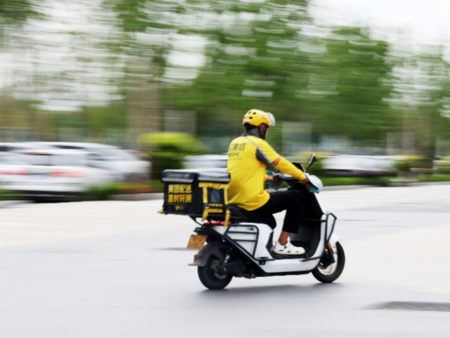
Meituan delivery driver | Image: Meituan
A Lesson in Inequality
The disparity in income levels is a significant factor in this trend. In China, the top 1% possesses a larger share of the nation’s wealth than the bottom 50%. With an average salary of around 353,000 yuan (approximately €45,000), many find it increasingly difficult to maintain a comfortable lifestyle. This economic reality encourages creative solutions like group orders, where multiple people can split the cost of a meal.
The Concept of 拼好饭 (Pīn Hǎo Fàn)
The Chinese phrase “拼好饭,” or “group food delivery,” embodies the spirit of sharing. This method allows individuals to place bulk orders from popular establishments, thereby enabling delivery drivers to make multiple stops in one trip. Companies like Meituan have effectively implemented this system, allowing patrons to choose popular dishes and collaborate on orders, making eating out more affordable.
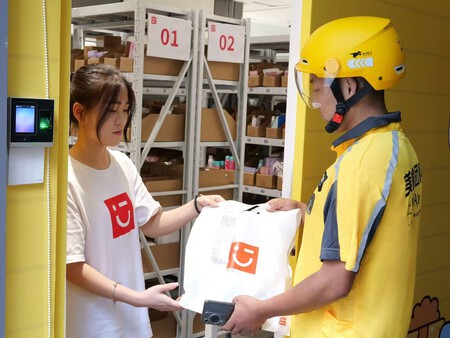
Image | Meituan
Savings Through Coordination
This group dining method, while requiring additional coordination, can save customers up to 50% on meals. For instance, in Guangzhou, ordering a roast duck leg with rice costs 28.8 yuan when purchased individually. With a group order, this price drops to just 11.2 yuan. By consolidating orders, customers can significantly reduce the impact of delivery fees, which can account for up to 80% of the total order cost.
Proven Success and Future Prospects
As is evident, users are willing to wait longer for meals if it means saving money. Meituan’s initiative began testing in 2020 and has rapidly gained traction. By April 2023, it had formalized a department specifically for group orders, processing 1.16 billion such orders—that’s 6% of all orders placed through the platform.
Implications for Other Markets
While the trend of group food deliveries is flourishing in China, the concept has not yet taken root in other countries like Spain. Although promotions and shared orders exist, there isn’t a direct counterpart to the innovative Chinese model. Companies like Uber focus on small groups rather than large communal orders. However, as the need for economical dining solutions increases, we might soon see similar systems emerge, especially in major cities.
This food-sharing initiative highlights a shift in consumer behavior—an adaptive response to economic pressures that could shape future dining trends worldwide.
Cover image | zhang kaiyv