
Madrid’s Metro Investment: A Technological Upgrade with a Twist
On February 14, 2024, the Community of Madrid confirmed a significant investment in their transportation infrastructure, committing to the installation of 145 new ticket vending machines across the city’s underground metro system. This deployment is part of the second phase of the Metro Technological Improvement Plan, which aims to modernize and revamp the facilities that have not seen substantial investment in over two decades. Alongside the vending machines, the plan includes the renovation of hundreds of metro access turnstiles, thereby enhancing the overall commuting experience for its users.
The Madrid Metro is one of the busiest and most expansive metro systems in the world, connecting millions of commuters daily. However, with increasing passenger numbers, the need for upgrades has grown paramount. The new machines will be distributed in 19 stations, including some of the busiest hubs such as Madrid-Barajas Airport, Nuevos Ministerios, and Príncipe Pío. The emphasis on modernizing these stations reflects a commitment to enhanced customer service and operational efficiency, aimed at making public transport more accessible and user-friendly.
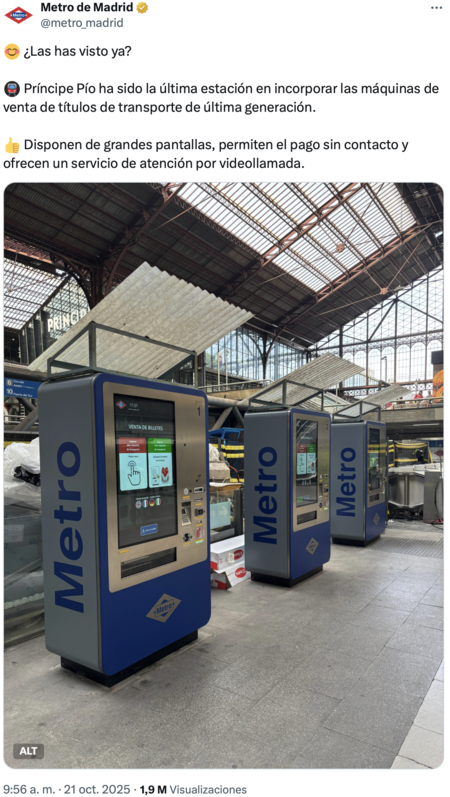
<span>Click on the image to go to the original tweet</span>Upgrading Experience: Cutting-edge Features
The new machines feature 42-inch high-definition screens and come equipped with the capability for users to initiate a video call with customer service for assistance if needed. This type of technology not only enhances the user experience but also sets a new standard in public transportation convenience. Users will benefit from an intelligent keyboard that supports natural language recognition, making it easier for people to select their destinations.
One of the major highlights of these machines is their implementation of Metta’s 4.0 technology. This is a term that implies cutting-edge advancements in user interaction and service provision within the transportation network. However, amid these technological advancements, the machines have faced some flak. Several users have taken to social media to voice their confusion regarding the plastic “umbrellas” that have been added atop the machines, giving them an unusual appearance reminiscent of outdated structures.

Controversy Surrounds the Umbrellas
The response to this unique design choice has been met with a mixture of humor and skepticism. The Madrid Metro had to clarify that these plastic additions serve a legitimate purpose; they act as a shield against leaks that, according to the Metro, are not their responsibility. Many users have pointed out that this setup makes the machines look less futuristic and more like a patchwork solution. Despite the criticisms, the investment of 7.7 million euros in these machines is aimed at ensuring that the metro services remain reliable and effective for all commuters.
Even with the umbrellas, the functionality of the machines remains largely intact. Users can purchase new transport tickets and avail themselves of support through the video call option, enhancing accessibility and ease of use. The ongoing challenges, such as leaks at certain stations, underscore the complexities of managing a sprawling and aging metro system while simultaneously modernizing its components.
The upgrade reflects Madrid’s dedication to ensuring that public transport remains a key part of urban life, addressing contemporary needs while grappling with legacy infrastructure. Even amidst humor and scrutiny, the hope remains that these investments will foster a well-functioning, modern transport network for the future.