
The Rising Tensions: NATO and Russia in Eastern Europe
Recent incursions by Russian military aircraft into NATO member airspace have raised alarms across Eastern Europe. Following an initial swarm of Russian drones that violated Polish airspace, NATO was compelled to respond with defensive maneuvers. This escalation further intensified when three Russian MIG-31 fighters crossed into Estonian airspace last Friday, prompting a swift reaction from NATO forces.
Understanding the Incursions
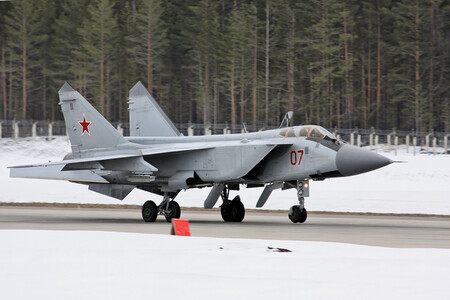
The latest incident involved three Russian MIG-31 Foxhound fighters breaching Estonian airspace without flight plans, transponders, or communication with local air traffic control. This blatant act of aggression occurred in the vicinity of Vaindloo Island in the Gulf of Finland, raising concerns about the increased frequency of such provocations.
In response to these tensions, NATO initiated the Eastern Sentry operation, deploying Italian F-35 fighters along with Swedish Jas 39 Gripens and Finnish aircraft to monitor and intercept any intruders. The urgency of these actions highlights a broader Russian strategy aimed at testing NATO’s resolve amid growing geopolitical tensions.
A Russian MIG-31 Fighter Jet
Political Reactions and Military Readiness
The political fallout from these incursions was immediate. Estonia’s Foreign Minister, Urmas Reinsalu, characterized the violation as an “unprecedented provocation,” urging swift political and economic repercussions against Moscow. Additionally, the Estonian Prime Minister communicated directly with NATO Secretary-General Jens Stoltenberg to emphasize the need for bolstered deterrent measures in the region.
In a show of solidarity, Estonia convened an emergency meeting of the United Nations Security Council for the first time in its 34-year history as a member. Concurrently, Lithuanian officials advocated for NATO to consider more aggressive countermeasures, drawing comparisons to past incidents where Russia faced consequences for similar aggression.
The Legal Framework: Article 4 of the NATO Treaty
Estonia is contemplating invoking Article 4 of the North Atlantic Treaty, which allows for consultations among allies when one member feels threatened. This move would signify the severity of the threat as well as the collective unity among NATO members in confronting these provocations.
The Eastern Sentry operation aims to provide rapid reaction capabilities while also extending its operational range from the Arctic to the Black Sea. This strategy is designed to enhance NATO’s defensive posture against the increasing incidence of Russian military aircraft and drones infringing on NATO airspace.
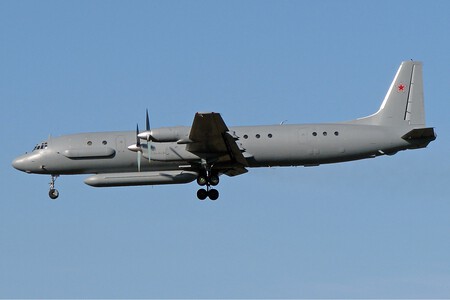
A Russian Ilyushin IL-20M Reconnaissance Aircraft
Heightened Military Engagement
The situation escalated further when German Eurofighter jets were scrambled to intercept a Russian IL-20M reconnaissance plane over the Baltic Sea. The Russian aircraft, flying with its transponder off, ignored prior communication attempts, reinforcing suspicions that these incursions are part of a systematic strategy to probe NATO defenses.
Western military experts argue that these actions are not isolated incidents but rather part of a coordinated series of provocations designed to gauge NATO’s reactions and resolve. This tactic aims to create psychological pressure, prompting a reevaluation of commitments among NATO members.
Concerns About American Commitment
One of the most alarming developments has been the perception that the United States may be considering a reduction in its commitments to the Eastern European front. Reports suggest that Kremlin sources believe President Putin feels emboldened by a potential softening of U.S. support for Ukraine and its neighbors, prompting a series of calculated military confrontations.
Despite reassurances from U.S. officials, emerging concerns hint at a dissent in unity among NATO allies, making some Eastern European nations particularly anxious about their security and military preparedness. This sentiment grows in light of reports indicating potential cuts to security assistance to vulnerable states like Latvia and Lithuania.
The Risk of Escalation
As tensions mount, leaders in the Baltic and central European states warn that the risk of miscalculation leading to direct conflict is markedly high. Latvian President Edgars Rinkēvičs cautioned against crossing “red lines,” asserting that erratic decisions by Moscow could inadvertently trigger a dangerous response from NATO.
Similarly, Czech President Petr Pavel called for a united and firm response to aggression, emphasizing that yielding to pressure could be interpreted as appeasement. Each incursion and violation further complicates the geopolitical landscape, incrementally raising the potential for miscommunication and escalation between NATO and Russian forces.
In this volatile environment, Ukrainian President Volodymyr Zelensky has expressed a willingness to engage in discussions with Kremlin representatives, including potential meetings with Donald Trump, to explore diplomatic solutions. However, Moscow’s stringent preconditions for dialogue suggest that a meaningful resolution remains a distant prospect.
The ongoing air violations, while seemingly localized incidents, symbolize a larger strategy by Moscow to test NATO’s resolve and capabilities. As these tensions persist, the Baltic states and Eastern European nations find themselves on the frontline of not just defending their sovereignty, but also ensuring the integrity and support of the NATO alliance in the face of mounting challenges.