
Discovery of Invasive Macroalgae in Galicia
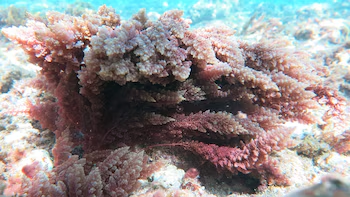
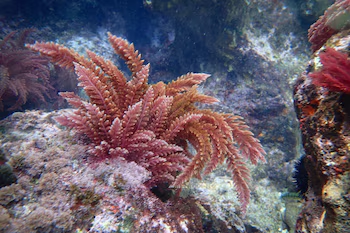
In a significant environmental development, the invasive macroalga Asparagopsis taxiformis has been identified for the first time in Galicia, specifically in the Rías Baixas region. This finding marks the northernmost point of the species in Europe, displacing its known range by over 500 kilometers.
Research Collaboration
The discovery was documented by an international research team led by the Spanish Institute of Oceanography (IEO, CSIC). Their findings were recently published in the journal Bioinvasions Records, with contributions from national organizations including IFAPA Centro El Toruño, the Marine Research Institute of the University of Cádiz, and the University of Málaga.
Causes of Invasion
Asparagopsis taxiformis is a marine red alga commonly found in tropical and subtropical regions. It is suspected that the alga reached Galicia due to rising water temperatures and human activities. The area where it was detected is characterized by relatively cold waters, which are becoming increasingly hospitable due to marine heatwaves and the general warming trend.
Anthropogenic factors, such as shipping and aquaculture practices, also contribute to the dispersal of invasive species like Asparagopsis taxiformis into new ecosystems.
Environmental Impact and Monitoring Efforts
The specimen detected in July 2025 belongs to lineage 2, known for its great invasive potential and environmental adaptability, enhancing its chances of survival in Galicia’s temperate waters. Despite the current population appearing incipient—with no reproductive structures observed—the potential for rapid establishment and proliferation remains high under favorable conditions.
Dr. Eva Cacabelos, a researcher at the Vigo Oceanographic Center of the IEO, emphasizes the importance of continuous monitoring to assess the ecological risks posed by Asparagopsis taxiformis. Its ability to monopolize space in coastal ecosystems poses a threat to native benthic communities and could disrupt existing biological structures.
Risks of Co-invasion
Additionally, there is a looming threat of co-invasion with Rugulopteryx okamurae, an Asian seaweed steadily advancing along the Spanish coasts since its initial detection in 2015. This dual invasion could exponentially amplify ecological impacts, making it crucial to implement proactive surveillance strategies to mitigate potential damages and preserve Galicia’s marine biodiversity.