

Renfe: The Competitive Landscape of Spain’s Rail Network
“We have no problem in competing (…) but whoever wants to come, to make the investments that it has to do and that competes on equal terms.”
Álvaro Fernández Heredia, the president of Renfe, made these remarks during a recent Executive Forum, indicating that the door is open for competitors within Spain’s rail sector to venture into Galicia . Renfe has established a strong presence on the Madrid-Galicia rail line, despite facing criticism for missing scheduled stops in Zamora and not meeting expected travel times. Nonetheless, this line has become a key growth area for the company.
Recently, it was reported that Renfe is experiencing record numbers of travelers, marking a significant milestone for the company. The Madrid-Galicia route has become particularly popular, even competing with air travel due to its superior scheduling options for daytime and early morning travel.
Competition on the Horizon. In recent developments, Adif has launched the second package of high-speed rail liberalization, allowing new players to potentially compete on routes such as Madrid-Galicia, Madrid-Asturias/Cantabria, and Madrid-Cádiz/Huelva. Competitors like Ouigo and Iryo could soon challenge Renfe’s dominance.
However, full-scale competition will not emerge until the next decade due to a lack of available trains. Notably, Talgo has already committed its production capacity to existing contracts, which will delay new entrants attempting to secure rolling stock. This scarcity has created a bottleneck that could hinder the expansion of competition unless new rolling stock can be rented from Renfe.
As reported by The Reason, Ouigo has approached manufacturers like Caf and Talgo about acquiring rolling stock, but they are already occupied fulfilling existing commitments. Consequently, the most viable solution for competitors may be renting trains from Renfe.

A Challenge for Competitors. However, Fernández Heredia has firmly dismissed the prospect of renting trains to other operators, emphasizing the need for equal competition conditions. He underscored that any new competitor must enter the market equipped to compete without resorting to strategies that could lead to operational losses, a pointed reference to companies like Ouigo that have been accused of market underselling.
Public Service Responsibilities. Renfe’s challenges are compounded by its obligations as a public service operator, which limits its pricing flexibility compared to private competitors. This burden became evident when Oscar Puente , Minister of Transportation, expressed concerns over the difficulties Renfe faces while having to maintain less profitable routes, such as those through Extremadura . These requirements do not support a level competitive field.
Future Liberalizations. Although Renfe currently enjoys a monopoly on the Galician corridor, impending liberalizations promise to shake up the landscape further. The lack of interchangeability between Iberian and international rail widths has positioned Renfe at an advantage. The Avril trains, while not without their own issues, are an asset that competitors currently lack.
Spain is also on the brink of additional liberalizations in the Cercanías sector, which has proven to be a controversial area due to its public service obligations. According to statistics, Renfe carried a staggering 259.5 million passengers in the first half of 2025, underscoring its critical role in public transportation.
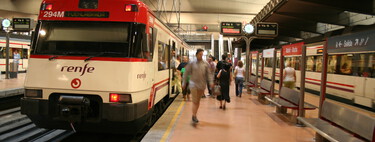
In conclusion, the dynamics surrounding Renfe, as Spain’s principal rail operator, exemplify the complexities of liberalizing a traditionally monopolistic sector. Although new players may eventually emerge, they will face significant obstacles, not least the company’s established presence and regulatory constraints. The competitive landscape is poised for transformation, but effective strategies will need to be implemented to ensure fair opportunities for all stakeholders involved in Spain’s evolving rail sector.