
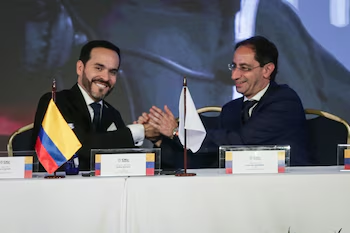
José Manuel Restrepo and the Suspension of the Merger Process with the Petro Government
The political landscape in Colombia is witnessing significant changes under the newly elected administration of Abelardo de la Espriella and his vice president, José Manuel Restrepo. On July 7, 2026, President-elect De la Espriella announced the suspension of the merger process with the outgoing government of President Gustavo Petro, alleging corruption and a threat to Colombia’s stability.
Accusations Against the Petro Government
De la Espriella did not hold back in labeling the Petro government as “corrupt,” claiming it aimed to “destroy Colombia.” This strong language reflects the political tension and polarization prevalent in the country. The incoming administration, led by De la Espriella, feels a responsibility to steer the nation towards a “serious, transparent transition,” as the leader of the political movement Defensores de la Patria emphasized the need for protecting national interests.
José Manuel Restrepo’s Response
Restrepo, who formerly served as Colombia’s Minister of Finance, was instructed by De la Espriella to halt the ongoing merger discussions. He publicly acknowledged this directive, highlighting that nearly 13 million Colombians had voted for a new direction in governance. On social media, he affirmed the legitimacy of their election, stating that the democratic will of the citizens must be respected.
The Importance of Institutional Responsibility
Restrepo’s comments underline the critical importance of institutional responsibility during such transitions. He reiterated that the newly elected officials have the duty to respect the constitutional order and the democratic choices made by the population. His firm stance indicates a commitment to transparency and accountability, reinforcing the notion that the incoming government will scrutinize the actions of the previous administration.
Challenges Ahead
Despite the suspension, Restrepo has made it clear that the halt in the merger process would not deter their efforts to prepare for the upcoming administration. He emphasized their ongoing efforts to collect data and assessments regarding the legacy the Petro government will leave behind. He pointed out that the new government aims to be thoroughly informed about the issues it will face, asserting, “Colombia deserves the truth, total transparency, and accountability.”
Institutional Guarantees and Future Implications
The Minister of Finance, Germán Ávila, has stated that there are currently no institutional guarantees to continue with the merger process. He pointed to ongoing personal attacks and a narrative that undermines the integrity of the transition. Ávila called for a respectful dialogue that aligns with the constitutional values.
Conclusion
The suspension of the merger process reflects deepening political divides in Colombia, with leaders like De la Espriella and Restrepo advocating for a transparent and accountable government moving forward. As they prepare to take office, their commitment to democracy and the will of the Colombian people remains at the forefront of their agenda. The coming weeks will be critical in shaping the direction of Colombia’s governance and its response to the challenges left by the previous administration.