
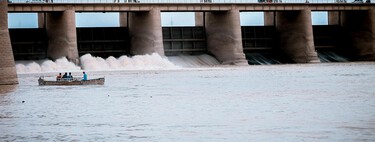
Summer’s Impact on Spanish Reservoirs: A Deep Dive into the Challenges Ahead
As summer unfolds, its effects on Spanish reservoirs grow increasingly concerning. After nearly twelve months of hydrological recovery , the intense heat of summer is beginning to take a toll, particularly within the basins of central and northern Spain. The retreating water levels highlight the ongoing challenges posed by climate variability and changing water consumption patterns.
Two Months of Decline—In just two months, the level of water retained in Spain’s reservoirs has dropped markedly. According to records, while the Spanish Water Reserve hit a seasonal high of 77.5% of capacity at the end of May, by the end of July, this figure plummeted to 68.4%.
A Faster Decline—This decline is occurring at a quicker rate than the average witnessed over recent years and is notably faster than the declines registered in the past two summers. At their peak, Spanish reservoirs stored approximately 43,407 cubic hectometers (HM³) of water; now, that figure stands at 38,311 HM³ , indicating a decrease of 11.74% since that maximum and a 9.1% reduction in relation to total system capacity.
When compared to previous years, this decline is alarming. At the same time last year, the drop was only 8.88% , and the average over the previous five years showed a decline of 11.18% for the same period. Over a decade, this figure is slightly adjusted to 10.98% .
Differential Basin Impact—The most impacted area appears to be the Galician coastline , where reservoir levels have plummeted from 548 HM³ down to 417 HM³ , reflecting a staggering 23.91% decrease. Other significant drops are observed in the Duero basin, where levels fell from 7,040 HM³ to 6,031 HM³ (a 14.33% reduction), and the Guadalquivir basin, which went from 4,905 HM³ to 4,206 HM³ (a decline of 14.25% ).
A Shift in Water Use Regulations—This change in water levels is compounded by a reduction in restrictions that were previously implemented due to the drought conditions experienced last summer. The severe lack of water led local administrations to adopt regulations aimed at limiting water consumption . However, as rainfall increased, these measures were gradually lifted, contributing to the rising water consumption that has, unfortunately, led to an accelerated depletion of reservoir levels.
June’s Anomalies—The heat of summer inherently increases water stress due to typically lower rainfall rates and heightened water usage. However, this year has been especially unique; June was reported as the hottest month on record while also experiencing just 68% of normal precipitation levels across the Iberian Peninsula. This unusual combination has raised alarms about the sustainability of water resources moving forward.
Evaporation Rates and Reservoir Stress—Extremely high temperatures lead to increased evaporation rates, forming another layer of concern regarding reservoir levels. A study published in 2000 estimated that around 1,400 HM³ of water is evaporated from Spain’s reservoirs and wetlands annually, contingent upon climatic factors as well as the levels of water within the reservoirs themselves. As weather warms and water levels drop, the rate of evaporation invariably increases, further straining water resources during peak usage times.
The Future Challenges—As Spain navigates through the persistence of summer heat, the evolving landscape of water management remains crucial. Solutions must be articulated to confront these environmental challenges and ensure sustainable water supplies for all sectors, particularly in agriculture and urban development.
Consequently, as the situation evolves, it remains imperative to consider strategies that can enhance water conservation, explore alternative water sourcing, and strengthen the management of existing water systems. With climate conditions becoming more erratic, immediate action is vital to navigate the complexities of managing Spain’s vital water resources.