

Rappi Faces Consequences Over Delivery Failures
On June 10, 2025, Indecopi, the regulatory body in Peru, imposed sanctions on Rappi SAC for multiple infractions linked to a missed delivery. The final resolution No. 1169-2025/PS3, accessed by Infobae Peru, revealed that a consumer lodged a complaint in January 2025 after a ‘Big Box Full Rappi’ order placed on December 27, 2024, went undelivered.
The situation escalated when Rappi refused to refund the order’s payment despite the significant delay in delivery. The resolution highlighted Rappi’s role as the intermediary in the delivery process, thereby making it responsible for addressing consumer complaints.
In its defense, Rappi partially admitted fault regarding the negative cancellation of the order and the lack of reimbursement. The company insisted that the delivery responsibility lay with KFC, with whom it had an agreement. However, the complainant chose to retract their action against KFC, concluding its involvement in the matter.
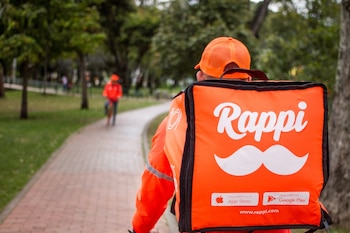
The investigation was initiated following the consumer’s complaint, which expressed dissatisfaction over the delayed delivery, leading to Rappi denying the cancellation of the order. The company stated that they could not reimburse the consumer due to their inability to make contact for delivery.
In response, INDECOPI issued a warning for the violation of Article 19 of the Consumer Protection and Defense Code, which mandates that suppliers must allow cancellations for orders experiencing notable delays. Rappi defended its stance as merely a technological intermediary, arguing that the responsibility for delivery rested entirely on affiliated restaurants like KFC.
In presenting its defense, Rappi submitted documentation showing KFC’s confirmation of the order’s delivery. Nevertheless, the complainant countered this by affirming that the product was never received. Rappi argued that they lacked access to the restaurants’ logistics information, as each business operated its own delivery system.
After reviewing the evidence, INDECOPI determined that, despite Rappi’s intermediary role, the company failed in its responsibility to facilitate order cancellations and manage reimbursements effectively. Consequently, Rappi was issued a warning, stating that while financial penalties were unnecessary at this time, corrective actions must be taken.

As part of the corrective measures, Rappi is required to update the order status to “canceled” within 15 business days and bear the procedural costs amounting to S/ 36.00. Failure to comply with these tasks will result in a coercive fine of up to one tax obligation unit (UIT).
According to INDECOPI, Rappi will be entered into the Registry of Infractions and Sanctions for four years, during which the company must enhance its processes to prevent similar infractions and improve service quality. Although the complaint against KFC was closed due to its withdrawal, Rappi must still shoulder its responsibilities as a delivery intermediary and adhere to the imposed corrective measures.
The resolution from INDECOPI will take effect once the administrative notice is received. The parties involved were also informed about their right to appeal the decision within 15 business days, providing a window for further contestation.
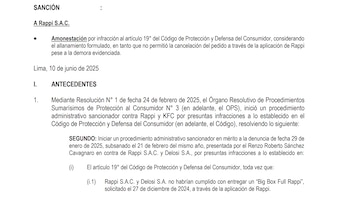
In recent months, KFC similarly faced sanctions from INDECOPI for unrelated issues. The agency penalized the restaurant for violations during the ‘mega family’ promotion. A client’s complaint revealed mismanagement concerning the specified chicken pieces in the promotional offer, leading to another reprimand for KFC.
At the end of March 2025, the specialized consumer protection room of INDECOPI sanctioned Rappi after determining that the company’s terms and conditions exceeded their liability regarding service failures and distributor issues. This ruling led to a substantial fine and the requirement to remove abusive terms from their contractual agreements.
Current market analyses indicate that Rappi is the leading delivery service in Peru, with substantial consumer adoption and brand recognition, demonstrating the company’s reach despite recent regulatory challenges. Rappi continues to expand its services, integrating diverse platforms to maintain its competitive advantage in the evolving delivery landscape.