
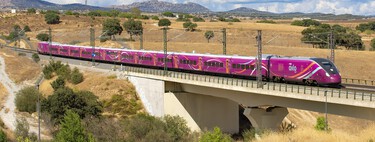
The Revolutionary Hydrogen Train for Narrow Gauge Tracks
Stadler and ARST have unveiled what is being touted as the world’s first hydrogen train tailored for narrow gauge tracks in Erlen, Switzerland. Set to start passenger service in 2028, this innovative train will operate on three lines in northern Sardinia.
What Has Happened?
The unveiling marks the culmination of a project initiated with a framework agreement in 2023, which includes the production of ten hydrogen trains for Sardinia’s rail network. These eco-friendly vehicles are designed to replace diesel engines, leading to a substantial reduction in carbon emissions—over 2,100 tons of CO₂ annually. Stadler compares this figure to eliminating approximately 450 car trips around the globe each year.
Why Is It a Technical Novelty?
This achievement is particularly groundbreaking as most hydrogen trains in Europe, such as Alstom’s Coradia iLint and Siemens’ Mireo Plus H, have been constructed for standard gauge tracks measuring 1,435 millimeters. In contrast, the rail network in Sardinia, Calabria, and Sicily maintains a narrower width of only 950 millimeters, a remnant of 19th-century engineering. To accommodate these constraints, Stadler crafted a new, lightweight aluminum body that meets rigorous axle load limits.
While hydrogen-powered trains are not entirely unprecedented—Spain’s FEVE attempted a hydrogen conversion in 2011—it is essential to note that this project represents the first narrow gauge hydrogen train specifically designed for commercial operation from the ground up.
Technical Details
The train’s propulsion system leverages fuel cells and hydrogen tanks. In a unique approach, Stadler has centralized all operational components in a designated Power Pack car rather than distributing them across the train’s roof. This arrangement allows more space within passenger compartments for amenities such as air conditioning, panoramic windows, and improved accessibility for passengers with reduced mobility.
Producing Its Own Hydrogen
In a noteworthy development, ARST has opted for an innovative model that produces its hydrogen through electrolysis, fully powered by solar energy. This integration ensures that the hydrogen production plant is embedded within the transport network itself. Carlo Poledrini, central director of ARST, emphasizes that these trains are pivotal to the decarbonization strategy for the narrow gauge network, marking a significant shift from being merely a transport operator to becoming a self-sufficient energy provider.
Expansion Plans
The ambitious project aligns with broader initiatives by the Italian Government and its Ministry of Infrastructure and Transport, aimed at decarbonizing rail lines in southern Italy. Stadler is also working on nine similar trains for Ferrovie della Calabria and two trains for Ferrovia Circumetnea in Sicily, specifically crafted to handle the challenging terrains around Mount Etna.
What’s Next?
Before these trains can begin transporting passengers, they must undergo a series of safety and operational tests. If all goes according to plan, the first unit should be ready for public use in 2028. The success of this innovation could pave the way for more sustainable rail travel options globally.