
The first thing that stands out when handling the Samsung Galaxy Z Fold7 is its transformation. Samsung has successfully made its most ambitious folding phone feel thinner , lighter , and, most importantly, more comfortable in hand. The differences compared to the previous generation are palpable, yet not something that photography alone can capture; you truly need to feel it to appreciate the nuances.
While the design remains recognizable, it exudes a different vibe. Gone is the industrial robustness that characterized the Galaxy Z Fold6. A bold decision has been made to eliminate compatibility with the S Pen, believed by many to be essential, yet deemed necessary for this generation’s evolution.
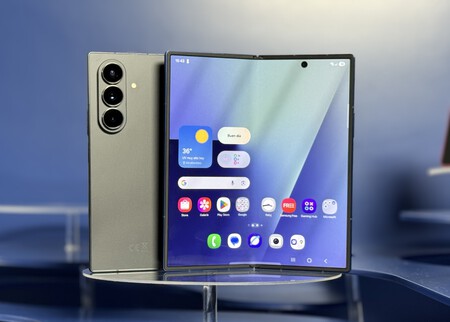
<span>Samsung Galaxy Z Fold7</span>In discussing the Galaxy Z Flip7, it’s evident that it too has made notable strides. While minimal changes are apparent on the outside, the device feels sturdier and more cohesive in hand. A notable visual detail is that the external screen now occupies a greater area than ever before.
This year marks the introduction of a third model: the Galaxy Z Flip7 Fe . Although we won’t delve deeply into this model in our first impressions, it follows the screen format of the Flip6 launched last year and aims to be an affordable alternative within the family.
Technical Specifications of Samsung Galaxy Z Fold7 and Z Flip7
Samsung Galaxy Z Fold7 | Samsung Galaxy Z Flip7 | |
|---|---|---|
External Screen | 6.5 inches, FHD+ Dynamic AMOLED 2X (2520 x 1080), 422 ppi, 120 Hz adaptive refresh rate | 4.1 inches, Super AMOLED (1048 x 948), supports 60/120 Hz refresh rate |
Main Screen | 8 inches, QXGA+ Dynamic AMOLED 2X (2184 x 1968), 368 ppi, 120 Hz adaptive refresh rate | 6.9 inches, FHD+ Dynamic AMOLED 2X, 120 Hz adaptive refresh rate (2520 x 1080) |
Processor | Snapdragon 8 Elite for Galaxy | Exynos 2300 |
RAM and Storage | 12 GB/256 GB | 12 GB/256 GB |
Front Camera | 10 MP (F/2.2, FOV: 85˚) exterior | 10 MP (F2.2, FOV: 85˚) |
Main Camera | 200 MP, Quad Pixel AF, OIS, F1.7 | 50 MP, Dual Pixel AF, OIS, F1.8 |
Battery | Dual 4,400 mAh (typical) | Dual 4,300 mAh (typical) |
Connectivity | 5G, LTE, Wi-Fi 7, Bluetooth 5.4 | 5G, LTE, Wi-Fi 7, Bluetooth 5.4 |
Operating System | Android 16 with One UI 8 | Android 16 with One UI 8 |
Colors | Intense Blue, Silver Gray, Dark Black, Mint Green (exclusive to Samsung.com) | Intense Blue, Dark Black, Coral Red, Mint Green (exclusive to Samsung.com) |
Others | IP48 resistance | IP48 resistance |
Price | Starting from €2,109 | Starting from €1,209 |
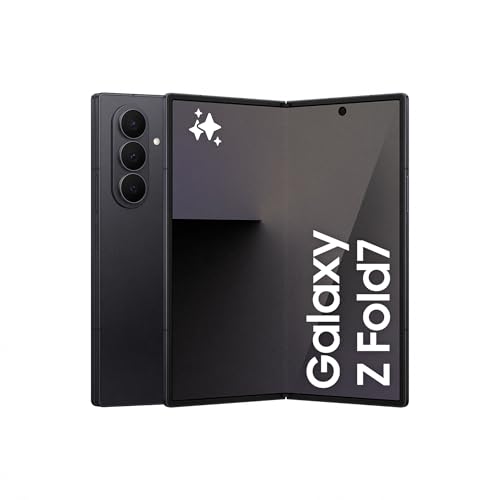
Samsung Galaxy Z Fold7, 256GB – A lightweight, folding device with a large screen, 200MP camera, and 12GB memory, available in Dark Black.
* Note: Prices may have changed since the last review.
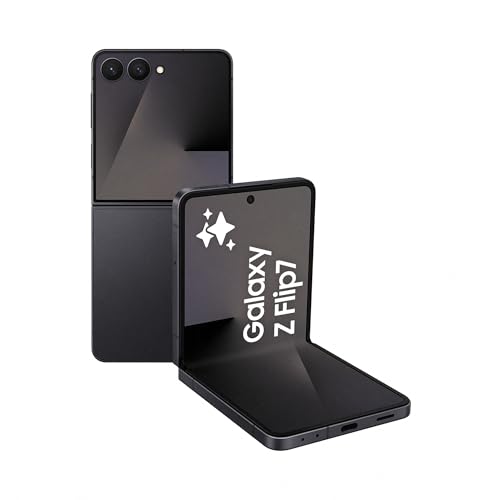
Samsung Galaxy Z Flip7, 256GB – A mobile with AI, folding design, wide screen, 50MP selfie camera, and 12GB memory in Dark Black.
* Note: Prices may have changed since the last review.
Common Innovations: Expanded Screens and Enhanced Designs
It took just a few seconds with the Fold7 in hand to realize that it had indeed changed. The exterior screen is now wider , which is immediately noticeable. The previous feeling of typing within a narrow vertical bar is eliminated, making it much more user-friendly. Though it may not reach the standards of a traditional non-folding mobile, it feels remarkably close.
Opening the device still feels ceremonial, yet there’s a rewarding sensation that accompanies it this time. The main screen has slightly expanded, and the edges of the device are less pronounced. Samsung claims the Fold7 presents less of a crease than its predecessors, and, upon first use, it becomes easy to forget it’s a folding phone at all. Tactile sensations still reveal its nature, albeit subtly.
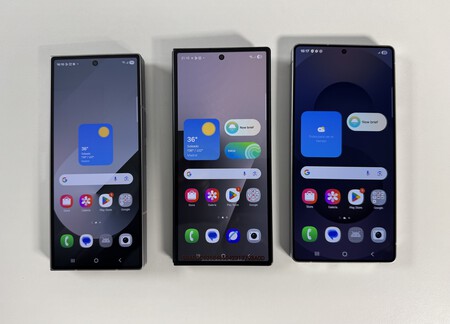
<span>Comparison of the Galaxy Z Fold6, Fold7, and Galaxy S25 Ultra</span>The visual transformations between the Fold6 and Fold7, compared alongside the Galaxy S25 Ultra, highlight an evolution where the Fold7’s aspect ratio aligns more closely with standard smartphone expectations.
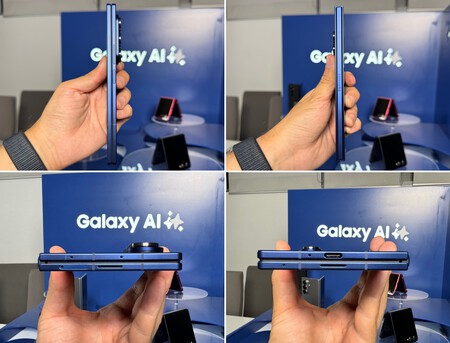
<span>Galaxy Z Fold7 Sides</span>Meanwhile, the Flip7 makes a significant leap in visual design. The external screen has expanded to better envelop the camera and flash components, creating an impressive look that’s vastly different when seen in person than in photographs. The inclusion of a 120 Hz refresh rate enhances fluid movement that’s simply captivating.
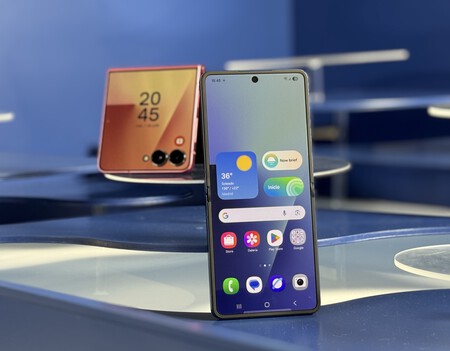
<span>Samsung Galaxy Z Flip7 folded and deployed</span>Internally, the Flip has also seen a slight increase in size, enhancing the experience by providing a broader canvas for various tasks.
Performance: Elevating Expectations
Performance-wise, there’s no room for doubt—the Galaxy Z Fold7 is powered by the Snapdragon 8 Elite for Galaxy , Qualcomm’s most advanced processor, specifically optimized by Samsung for enhanced performance. Though I haven’t fully tested its limits yet, initial impressions reveal that everything operates smoothly. Apps launch quickly, and multitasking functions seamlessly cater to diverse needs. Moreover, Samsung has committed to support Android 16 for seven years.
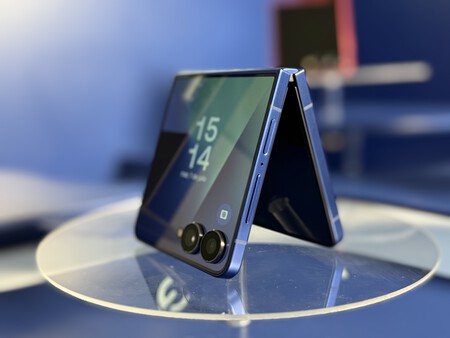
<span>Samsung Galaxy Z Flip7</span>On the other hand, Flip7 employs the Exynos 2300 processor, which also delivers speed and efficiency in early tests. Apart from its performance capabilities, it now supports Samsung Dex , a feature once limited to higher-end models. This addition signifies the maturation of this folding format.
Another critical aspect is battery life. Samsung has optimized the Flip7, increasing its capacity from 4,000 mAh to 4,300 mAh . Test results will determine the impact of these changes on longevity, but clearly, the trajectory indicates a quest for enhanced battery performance.
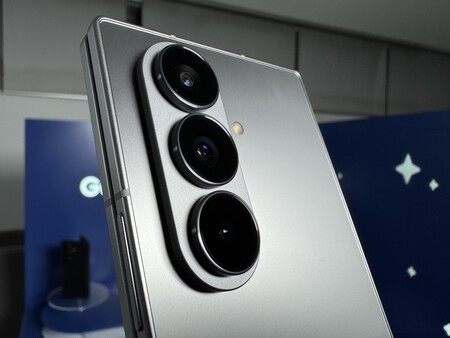
<span>Galaxy Z Fold7 Camera Module</span>Before even diving into photography, there’s a shift in the camera module design. The Galaxy Z Fold7 moves away from its previous industrial look with pronounced rings around each lens, now adopting a more streamlined aesthetic that appears sleek and refined. This subtle transformation is noticeable at first glance.
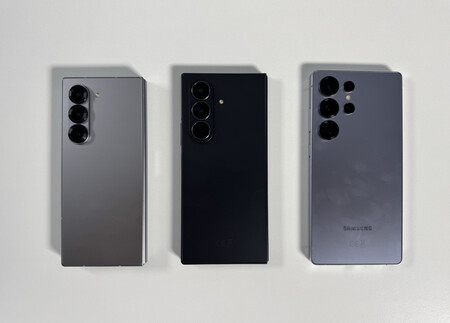
<span>Comparison of Galaxy Z Fold6, Fold7, and S 25 Ultra</span>Samsung has significantly raised the stakes with a 200 MP main camera in the Fold7. While I haven’t yet had the opportunity to capture real-world images, its potential holds great promise compared to the previous model’s 50 MP setup. No longer hidden beneath the internal screen, the front camera is now visible with enhanced viewing angles—though this transparency could swing opinions.
<img alt="Xiaomi Mix Flip 2" width="375" height="142" src="https://i.blogs.es/b8464b/xiaomi/375_142.jpeg"/>While the Flip7 doesn’t radically alter the imaging hardware, it boasts intriguing enhancements. When taking selfies using the external screen, users can now see real-time filter applications around the lens, enhancing interactivity and engagement—small tweaks that greatly uplift the user experience in a device designed for compact use.
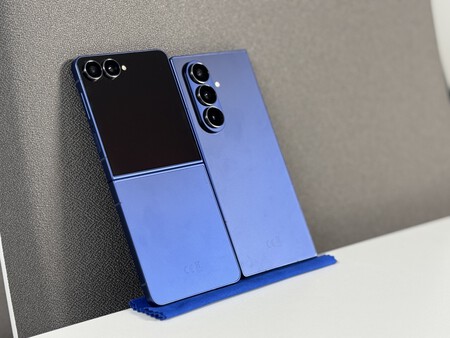
<span>Samsung Galaxy Z Flip7 (left), Galaxy Z Fold7 (right)</span>On the software side, all functionalities from previous models—such as Rodea to search , Note Assist , Chat Assist , Browsing Assist , and more—remain intact. The Flip now features a more customizable exterior screen , alongside an upgraded Now Brief for both devices.
Final Thoughts: A New Era of Folding Devices
The Galaxy Z Fold7 and Galaxy Z Flip7 refine Samsung’s folding phone offerings, signaling a maturation in this innovative format. The updates entail a price increase compared to their predecessors , although the Flip maintains its previous pricing structure. Users can pre-order these devices on Samsung.com and various online retailers, with a release date set for July 22 in Spain.
Samsung Galaxy Z Fold7, 256GB – A lightweight, folding device with a large screen, 200MP camera, and 12GB memory, available in Dark Black.
* Note: Prices may have changed since the last review.
Samsung Galaxy Z Flip7, 256GB – A mobile with AI, folding design, wide screen, 50MP selfie camera, and 12GB memory in Dark Black.
* Note: Prices may have changed since the last review.
Images | Xataka
In Xataka | In 2017 the iPhone revolutionized smartphones and ultimately led to the demise of many fun mobile designs.