
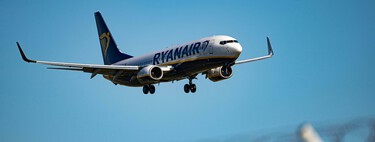
Ryanair, the leading low-cost airline in Europe, reported a staggering 13.4 billion euros in revenue for the year 2024. Surprisingly, 4.3 billion euros of this sum originated from sources not directly related to passenger transport. This revenue highlights the airline’s reliance on “ extras ,” such as fees for cabin luggage, a crucial aspect of its business model.
During a recent press briefing in Dublin, CEO Michael O’Leary voiced his perspective on the company’s baggage policies, stating, “I don’t want any suitcase money. I prefer passengers to fly without suitcases.” These comments have ignited discussions about Ryanair’s contentious baggage fees and the company’s overall strategy regarding hand luggage.
When questioned about the ongoing dispute over Ryanair’s charges for hand or cabin baggage, O’Leary referenced the costs associated with additional luggage . Currently, the airline imposes stiff fees on passengers who exceed the stipulated luggage restrictions. Ryanair’s policy aims to ensure that passengers stay within the limits to avoid additional charges.
O’Leary elaborated on the financial repercussions of luggage, explaining that extra suitcases contribute to fuel costs — an increase in plane weight translates into higher expenses. The internal assessment conducted by Ryanair places the average cost of carrying a passenger at 34 euros . This figure becomes critical when considering how much of this cost is offset by baggage fees.
For instance, the cost for checking a 10 kg suitcase ranges from 23.99 euros to 44.99 euros . However, for passengers who exceed the size limits without prior arrangements, the fees can go up to 60 euros . This penalizes travelers who are not adequately informed of the rules or who mistakenly believe their luggage complies with Ryanair’s policies.
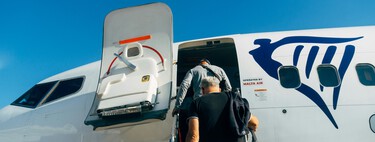
As our colleague Javier Lacort pointed out, Ryanair’s revenue largely derives not from ticket sales but rather from services ancillary to the flight itself, which includes everything from checked baggage fees to onboard refreshments and additional services like hotel bookings or car rentals. The airline has developed a sophisticated approach that emphasizes maximizing revenue from all aspects of air travel.
Furthermore, Ryanair enforces strict penalties on customers who fail to adhere to its regulations, creating an atmosphere of caution among travelers. Recently, the airline announced it would start charging passengers who do not have their tickets readily accessible on mobile devices, further intensifying scrutiny on compliance.
O’Leary’s comments come amidst a heated debate concerning hand luggage regulations within Europe. Recently, the Council of Europe proposed a standardization of minimal hand luggage allowances, which directly relates to low-cost airlines like Ryanair. However, complications have arisen as the European Parliament seeks to increase luggage dimensions significantly, indicating contrasting approaches within the EU framework.

While this regulatory environment evolves, Ryanair has made a small concession in its hand luggage policy, allowing bags with dimensions up to 40 x 30 x 20 cm . This adjustment appears insignificant but creates a marginally higher volume for travelers to carry onboard. The airline historically allowed only 40 x 25 x 20 cm , making the change beneficial, albeit slight.
This move is an apparent attempt to align with broader regulations while maintaining its existing operational framework. Ryanair has historically capitalized on such metrics to streamline profits; such adjustments may also be construed as a response to external pressures from governing bodies.

Despite these developments, legal uncertainties persist regarding the legitimacy of Ryanair’s luggage regulations. The ambiguity in current regulations has led to mixed judicial rulings in Spain regarding the airline’s baggage policies. Some courts uphold Ryanair’s stance, while others favor the passengers, indicating an ongoing tumultuous relationship between the airline and consumer rights advocates.
In summary, while Ryanair continues to thrive under its low-cost business model, its heavy reliance on baggage fees and ancillary services poses challenges and draws scrutiny. O’Leary’s perspectives represent a broader strategy that prioritizes revenue from all available avenues, challenging passenger expectations and emphasizing compliance.
Photo | Polish Presidency of the Council of the EU 2025 and Giorgios Savidis