

In recent months, Japan has been grappling with a significant crisis stemming from its aging population. This demographic shift has manifested in various unusual ways. For instance, schools are transforming into hotels to accommodate the elderly, while many seniors opt to live in prisons rather than face loneliness on the outside. With a serious labor shortage among the youth, retirement has become a distant dream for many, prompting an increasing number of individuals over 70 years to remain in the workforce.
One of the latest trends in response to this situation is the emergence of a rental grandmother service .
Ok Obaachan , a unique initiative, allows people to rent grandmothers by the hour for diverse tasks, including cooking lessons, childcare, companionship, or even emotional support. This service highlights a pressing need in a society where loneliness and isolation have become common experiences among the aging population.
Beneath the seemingly whimsical service lies a serious reflection on the economic and social tensions facing Japan’s elderly. With over 9.3 million individuals aged 65 and older remaining active in the workforce—about one in four older adults—many find themselves in need of additional income to cover basic living expenses. For these women, Ok Obaachan offers a much-needed economic opportunity while allowing them to feel engaged and relevant in a rapidly evolving society.
A human catalog . Offered by the Client Partners company, the service presents a diverse group of grandmothers for hire, with a cost of approximately 3,300 yen per hour (excluding transportation). Currently, around 100 women aged 60 to 94 years are available, each bringing unique skills ranging from cooking and calligraphy to simply listening and offering emotional companionship.
What started as a practical service has evolved into a deeply human experience. Grandmothers are now accompanying individuals looking to come out to their families, participating in research on social evolution in Japan, and supporting those struggling to navigate everyday challenges.
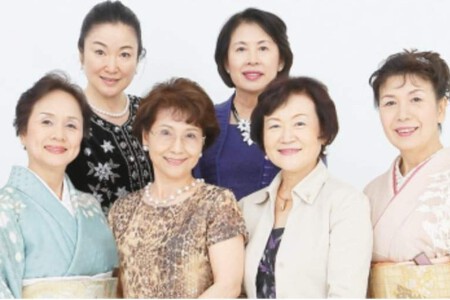
Some of the “rental grandmothers”
Grandmothers of all backgrounds . The clientele for these rental grandmothers is diverse: individuals without families, lonely adults, or even couples experiencing relationship difficulties. The services provided range from practical assistance to fulfilling emotional needs, filling gaps that society has overlooked.
Social reactions . The introduction of this service has generated a spectrum of reactions within Japanese society. Some individuals appreciate the opportunity to receive guidance and care from experienced figures, while others express discomfort regarding the commercialization of human relationships . Social media has seen mixed responses, with some commending the innovative approach and others questioning the implications for the elderly’s safety and the absence of equivalent services for men.
Indeed, Ok Obaachan remains exclusively focused on women , as is its counterpart services like “rental friends” or “rental relatives.” A male version, called Ossan Rental , exists but operates on a more informal level, lacking the structure and visibility of the grandmother service.
Grandmothers as a symptom of change . The rise of such services cannot be viewed in isolation from the broader demographic landscape. Japan is among the most aging countries globally, with an inverted population pyramid, low birth rates, and an average life expectancy exceeding 85 years .
Traditional family dynamics have weakened, with more single-person households and faltering intergenerational connections. As a result, older adults not only face economic instability but also an existential void . Services like Ok Obaachan essentially create a type of emotional economy , providing affection and support that once defined family life. Far from being a mere curiosity, this service reflects a significant response—both adaptive and commercial—to a pressing societal need.

A reflection of contemporary society . While the rise of Ok Obaachan may appear heartwarming or even ingenious, it is ultimately a sign of cultural transformation . The once lovingly perceived role of grandmothers is now commercialized, with affection and support becoming negotiable services.
What was previously offered freely and spontaneously is now organized, priced, and hourly contracted . This change signifies not only resilience among older individuals but also a commentary on a society where all needs, even emotional ones, must be satisfied through transaction. In light of these trends, Japan might be a precursor, offering insight into a phenomenon poised to unfold across other industrialized nations grappling with similar challenges.
Image | Miki Yoshihito, Client Partners
Recent developments indicate that the demand for such services is unlikely to diminish. As societies evolve, the question arises not why such services exist, but rather why they are so necessary. Understanding the emotional and economic underpinnings of these trends is crucial for adapting to a rapidly changing world.