
Supreme Court Decision on Immigration Deportations
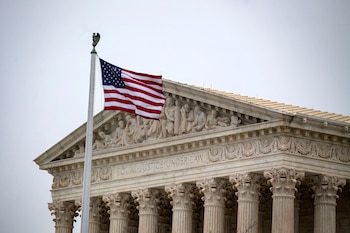
The United States Supreme Court has recently approved an emergency request from the national government to resume deportations of migrants to countries other than their home country. This includes regions marked by violence, such as South Sudan, without any formal notice or opportunity to appeal.
This ruling represents a significant victory for the more hardline faction of the Republican immigration policy by temporarily blocking a federal judge’s order requiring the Department of Homeland Security (DHS) to notify migrants in advance about their deportation destination and allow them to claim a fear of torture.
The court did not provide an explanation for its decision, which was met with dissent from the three liberal justices: Sonia Sotomayor, Elena Kagan, and Ketanji Brown Jackson. Sotomayor criticized the ruling as a “reward for illegality,” accusing the Trump administration of disregarding previous court orders.
Judicial Context of the Ruling
The core of the legal debate centers on compliance with the Convention Against Torture, ratified by the U.S. Senate in 1994, which prohibits deportation to countries where migrants could face torture. However, the law leaves ambiguities regarding how to apply this principle and what minimum procedural rights must be guaranteed.
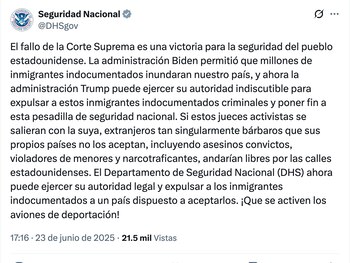
Through a post on the social network X (formerly Twitter), the Department of Homeland Security (DHS) celebrated the Supreme Court’s ruling as “a victory for the safety of the American people.”
In its message, the agency stated that following what it characterized as lenient policies under President Joe Biden, the Trump administration can now exercise its “unquestionable authority” to deport illegal migrants, including those with criminal records, to countries willing to receive them.
According to the DHS statement, if previous judicial decisions had remained in force, individuals “as brutally dangerous as to be rejected by their home countries,” such as murderers, child sex offenders, and drug traffickers, “would be walking freely on the streets of the United States.”
Impact on Migrants
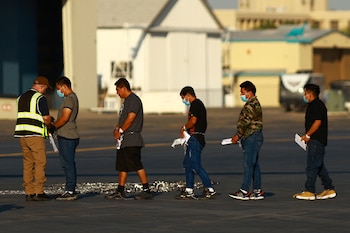
With the Supreme Court’s ruling, the agency can now execute “its legal authority” and proceed with deportations. “Start the planes,” concludes the agency’s message.
In May, the First Circuit Court of Appeals in Boston rejected the government’s request to suspend Judge Murphy’s ruling, which required granting migrants at least 10 days to present a claim of fear of torture and an additional 15 days to appeal if the request was denied.
The Trump administration argued that this order interfered with foreign policy decisions and national security. Additionally, it maintained that many of the migrants being sent to third countries had serious criminal backgrounds.
However, migrant lawyers refuted that claim before the Supreme Court, indicating that many of the detainees do not have criminal convictions. According to their defense, the process violated minimum constitutional guarantees.
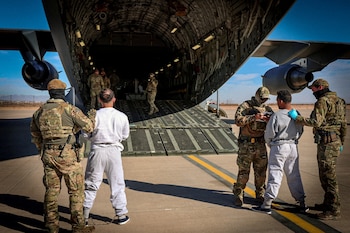
The DHS indicated that when it receives “guarantees” from the receiving country that there will be no torture, it is not obligated to inform the migrant about their destination. Only if there are no such guarantees is the migrant notified, allowing them to invoke protection under the Convention Against Torture.
Judge Murphy deemed it unacceptable for migrants to be notified with less than 24 hours of advance about their deportation to a country with known risks. His order was appealed by the Republican administration, which now obtains the support of the Supreme Court at this initial stage of litigation.
The Court has ruled in favor of Trump multiple times regarding immigration measures. Just a few weeks ago, it supported his decision to end the temporary protected status for Venezuelan nationals and restrict humanitarian parole programs for Cubans, Nicaraguans, and Haitians.
However, it has also occasionally limited his scope of action. In an earlier ruling, the high court blocked attempts at deporting migrants without due process under the Alien Enemies Act of 1798, citing violations of basic rights.