
Restrictions on Cristina Fernández de Kirchner’s Home Visits
The Federal Oral Tribunal No. 2 has denied the request made by the defense team of Cristina Fernández de Kirchner for her to receive visitors without restrictions at her home on San José 1111, where she is currently serving her house arrest. Instead, the judges are considering a list of names that would allow select individuals to meet her without prior judicial authorization.
This decision stems from two submissions made by Carlos Beraldi , Kirchner’s attorney, in the Comodoro Py courts. Beraldi specifically requested that the composition of this list be kept confidential , although it has been indicated that it includes family members, healthcare providers, and security personnel.
According to a judicial resolution accessed by Infobae , the tribunal—comprised of judges Jorge Gorini , Rodrigo Giménez Uriburu , and Andrés Basso —noted that the defense’s “rejection of conduct guidelines” did not alter the reasoning and justifications previously provided by the court. This ruling has been met with considerable disappointment from Kirchner’s supporters.
As reported by her inner circle, the resolution from the tribunal will be appealed to the Federal Criminal Cassation Court . Kirchner’s legal team emphasizes that individuals serving sentences at home are entitled to engage in all activities not expressly prohibited by law.
Legal Arguments and Reactions
Beraldi’s argument hinges on the point that “those serving their sentences in a private residence can undertake all activities not prohibited by law.” He asserts that the legislation does not allow judges to impose additional conduct rules on individuals serving house arrest, apart from the strict and rigorous adherence to the deprivation of freedom.
Gregorio Dalbón , another attorney representing Kirchner, has publicly criticized the decision of TOF No. 2 , arguing that the current visitation regime constitutes an extra punishment beyond the legal sentence. “Genocides can be visited by anyone, but if a president like Lula Da Silva wants to see Cristina, he must ask the court?” Dalbón questioned during an interview with Infobae.
“This is ridiculous ; who are the judges to permit or deny who visits Cristina? They are once again demonstrating their absurdity, as was evident when they had to clarify the issue concerning the balcony,” he reproached.
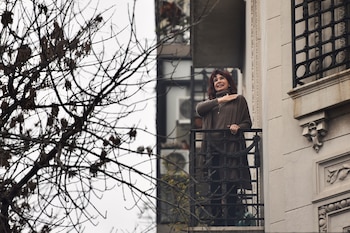
Another contentious issue has arisen regarding the conditions under which Kirchner must reside at San José 1111. Judges instructed her to avoid “engaging in behaviors that could disturb the peace of the neighborhood or disrupt the harmonious coexistence of its residents.” This stipulation led to a request for clarification on whether she could use the balcony.
To eliminate any confusion regarding the interpretation of the aforementioned conduct norm, the tribunal later stated that it had not prohibited Kirchner from using any specific areas of her residence.
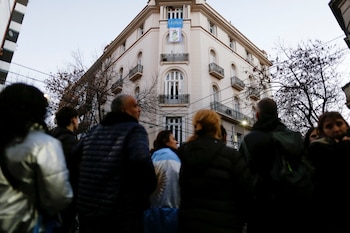
The legal community has been monitoring these developments closely, as they may have far-reaching implications for how house arrest is enforced in similar cases. The ongoing controversies surrounding Kirchner’s situation highlight not only her legal plight but also the intricate dynamics of Argentine politics and justice.
This situation remains dynamic, with updates expected as the legal proceedings unfold. The impact of the tribunal’s decision on public opinion and future legal precedents is yet to be determined. As the case develops, many will be watching to see how both the judicial system and Kirchner’s supporters react to these challenges.
General News – 2