
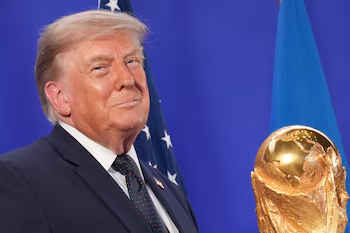
The World Cup Final: A Political Arena
As Spain and Argentina vie for the World Cup title at MetLife Stadium, another drama unfolds just a few feet away in the VIP box. This juxtaposition highlights the intricate dynamics of international relations as leaders with conflicting agendas convene under one roof.
The Lineup of Leaders
A Host of Discrepancies
While the athletes battle it out on the field, U.S. President Donald Trump will be sharing space with several key political figures, including Spanish Prime Minister Pedro Sánchez, Canadian Prime Minister Mark Carney, and Mexican President Claudia Sheinbaum. Each of these leaders comes with a backdrop of ongoing geopolitical tensions, which makes their assembly at the final noteworthy.
España vs. USA: Tensions Rise
The meeting between Trump and Sánchez is particularly anticipated. Their recent history is marred by disagreements over defense spending and military cooperation. Trump has been vocal about his discontent, criticizing Spain as a “terrible and disloyal partner” in NATO. The optics of them sharing a box could serve as an ironic twist in their ongoing dispute.
The Canadian Controversy
Canada’s relationship with the U.S. is also fraught with strain, especially after Trump’s recent threats to impose tariffs due to environmental concerns linked to wildfires in Ontario. If these two leaders exchange dialogue during the match, it could either exacerbate tensions or lead to a breakthrough.
Mexico’s Role
Mexican President Claudia Sheinbaum faces her own hurdles in dealings with Trump. In a climate of accusations regarding drug cartel activity, their interactions are increasingly scrutinized. The final provides an opportunity for both leaders to address these tensions publicly, or perhaps even privately.
Notable Absentees and Different Dynamics
Interestingly, Javier Milei, the Argentine president, will not attend due to personal beliefs surrounding superstition. His absence highlights that even as countries aim for the title, their leaders are guided by personal convictions that impact international relations.
A Unique Diplomatic Angle
While some leaders carry contentious baggage, the presence of Spanish King Felipe VI offers a contrasting dynamic. His institutional respect for Trump may pave the way for a more diplomatic engagement, potentially moderating the tensions surrounding the event.
The Role of FIFA’s Gianni Infantino
Gianni Infantino, president of FIFA, will also be in attendance, navigating this complex political landscape. His reputation for being close to Trump could stir debates around FIFA’s independence, especially following controversial decisions linked to player sanctions.
Conclusion: More Than Just a Game
The final of the 2026 World Cup transcends sports. With a gathering of leaders with divergent stances on critical issues, this event becomes a microcosm of global politics. The interactions—whether symbolic gestures or heated exchanges—will undoubtedly capture attention as the world watches not only the sporting event but the political narratives unfolding in the VIP box.