
| IN BRIEF |
|
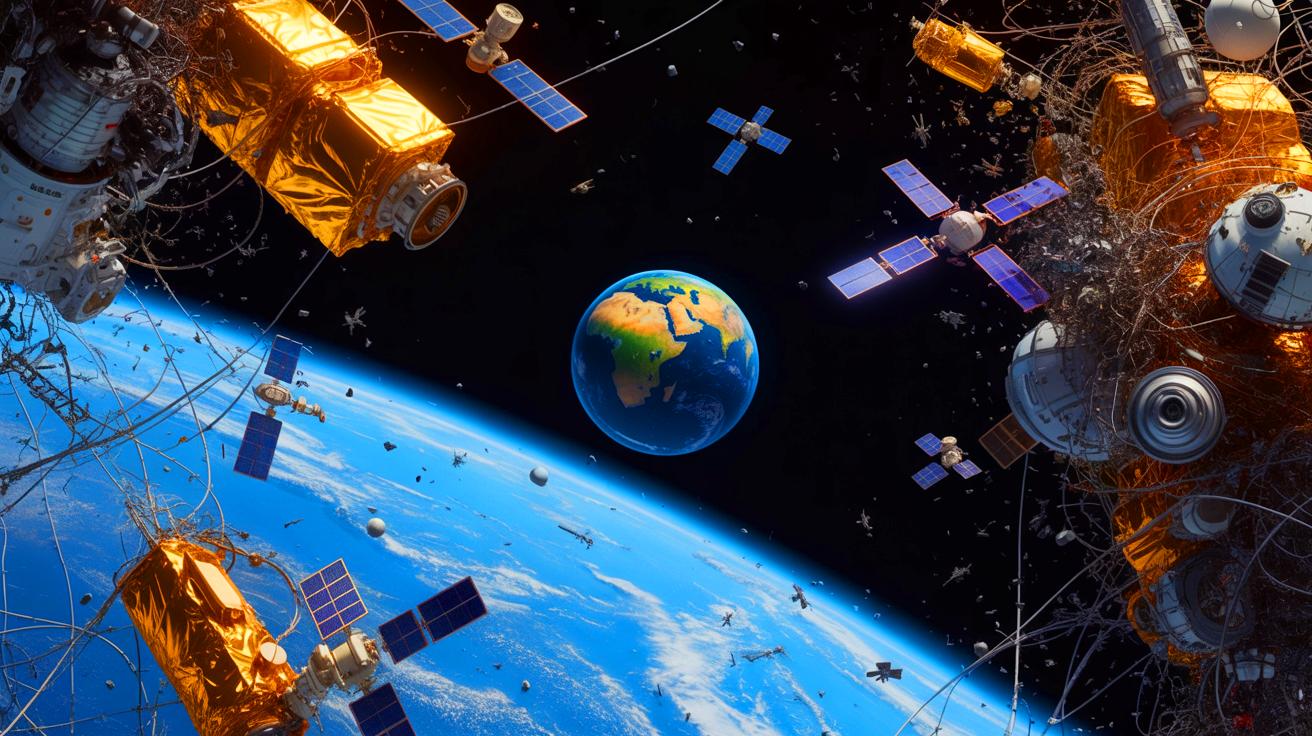
The rapid pace of technological advancements and the continual expansion of space activities have put us at a pivotal crossroads. A recent study from the Massachusetts Institute of Technology (MIT) sheds light on the growing challenges we face in ensuring the sustainability of space. As the population of satellites in low Earth orbit continues to increase, the effects of climate change on the Earth’s atmosphere could significantly alter our ability to utilize this space effectively. This finding raises pressing questions about space debris management and the future of our activities beyond Earth.
Understanding the Impact of Greenhouse Gas Emissions on the Thermosphere
The thermosphere is an essential atmospheric layer that regulates the environmental conditions of space. While greenhouse gases are widely recognized for their warming effects, their impact on the thermosphere is fundamentally opposite: they induce cooling . This phenomenon results in a contraction of the thermosphere, effectively reducing the atmospheric drag that typically helps eliminate space debris.
This situation is particularly concerning, as the capacity of low Earth orbit to accommodate satellites could decrease by 50 to 66% by 2100 if emissions continue to rise. William Parker, the lead researcher of the study, emphasizes the importance of proactively managing our space activities and taking measures to reduce greenhouse gas emissions. Without such actions, we risk rendering some orbits unusable due to overcrowding and increased collisions.
Building your own satellite becomes a reality: the E-Cube changes the game in space exploration
Computer Simulations: A Crucial Analytical Tool
MIT researchers have employed computer simulations to evaluate the potential effects of greenhouse gas emissions on space. These simulations have enabled the study of various emission scenarios and their consequences on the transport capacity of low Earth orbit. Currently, over 10,000 satellites occupy this orbit, providing essential services such as internet connectivity and navigation.
The findings indicate that the increasing number of satellites has led to a surge in collision avoidance maneuvers, producing persistent debris and heightening the risk of further collisions. Understanding these dynamics is crucial for evaluating the sustainability of our space activities. The simulations stress the necessity for proactive management and international cooperation to ensure the safety of space.
“They can see our faces from orbit”: China deploys a terrifyingly precise spy satellite
An Increasingly Crowded Space Due to Satellites
The MIT study highlights that space is becoming increasingly congested, particularly due to megaconstellations. This situation, combined with the effects of climate change, poses a major risk to the safety and sustainability of the orbital environment. The researchers evaluated several greenhouse gas emission scenarios, concluding that rising emissions drastically reduce the capacity of low Earth orbit.
An overloaded capacity could lead to “uncontrolled instability,” triggering a cascade of collisions. Richard Linares, an associate professor at MIT, warns that certain orbital regions are already nearing this limit. It is thus urgent to take measures to prevent the situation from deteriorating.
Implications for Space Debris Management
The natural removal of space debris by the atmosphere is disrupted by climate change. The reduced capacity of the thermosphere to eliminate these debris increases the risk of orbital congestion, jeopardizing the safety of space operations. The MIT team emphasizes the importance of controlling greenhouse gas emissions to manage this long-term issue.
Published in Nature Sustainability, this study underscores the need for sustainable space management and international cooperation to protect this vital environment. The critical question remains how we can adapt our policies to tackle this growing challenge.
As space exploration continues to evolve to improve life on Earth, it is imperative to consider the impact of our activities on the space environment. MIT’s findings highlight the urgency of reducing greenhouse gas emissions to avert a potential space crisis. How can we, as a global community, ensure the sustainability of space while pursuing our technological and economic ambitions?
The author has incorporated artificial intelligence to enhance this article.
Did you enjoy this? 4.5/5 (23)