
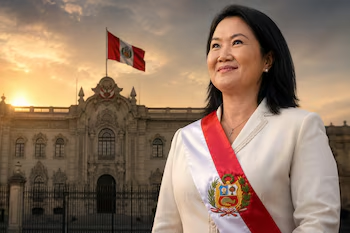
The Final Stages of Fujimori’s Election
The presidential race in Peru has entered its concluding phases, with Keiko Fujimori declared the winner over Roberto Sánchez by a narrow margin of 49,641 votes. With the National Office of Electoral Processes (ONPE) reporting that Fujimori secured 50.135% of valid votes, the official validation now rests with the National Election Jury (JNE).
Despite the count being completed, formal closure hinges on actions required from the JNE. Legal expert José Tello highlights the need for decentralized proclamations from the Special Electoral Juries (JEE), which are essential for cementing the electoral results ahead of the JNE’s final announcement.
Key Steps Ahead
Following the completion of the vote count, the JEE will begin their decentralized proclamations across various jurisdictions. This process is vital for confirming results before transitioning to the JNE for a comprehensive review and final proclamation. Tello anticipates that the JNE may initiate a review process to ensure procedural integrity and mitigate potential appeals that could delay proceedings.
Timeline for Proclamation
Roberto Burneo, the JNE president, has indicated that the final proclamation of results could occur on July 3, pending completion of all necessary steps. The JNE’s decision is definitive and cannot be appealed, marking the official end to the electoral process.
Once confirmed, the delivery of credentials to the winning candidate will take place, officially accrediting Fujimori as the president-elect. This act signifies the conclusion of the electoral framework, setting the stage for the new government transition.
Inauguration and Future Challenges
The inauguration is scheduled for July 28, wherein Fujimori will assume office in a ceremony before the Congress of the Republic. This day will symbolize the start of a new administration, bringing to a close a politically charged electoral campaign.
As the transition unfolds, the new government will face mounting pressures, especially in the current political climate marked by instability and crises. Peru’s history of frequent changes in leadership demands a consistent and cohesive approach to foster political stability.
Building a Coalition
Although Fuerza Popular, Fujimori’s party, maintains a significant presence in both the Senate and Chamber of Deputies, it still lacks an absolute majority. This scenario underscores the necessity for strategic alliances with other political factions to implement an effective governance agenda.
The new administration’s success will largely depend on its ability to navigate this complex political landscape, garnering support to push forward critical reforms and maintain national cohesion.
Conclusion
The election of Keiko Fujimori marks a pivotal moment in Peru’s trajectory. As the country gears up for its leadership transition, all eyes will be on how Fujimori navigates the challenges ahead and whether her administration can unify a politically fragmented Congress. The forthcoming weeks will be crucial in shaping the roadmap for Peru’s future, driven by the urgency for political stability and effective governance.